

NEMT Entrepreneur provides expert insights, strategies, and resources to help non-emergency medical transportation professionals grow their businesses. Get industry-leading advice to succeed in NEMT.
Featured articles
NEMT onboarding is far more complex than traditional transportation onboarding. While rideshare and taxi services focus on basic driver checks and vehicle requirements, NEMT involves strict healthcare compliance, specialized training, and ADA-compliant vehicles. This is because NEMT serves passengers with medical needs, such as those requiring wheelchairs or stretchers, and works closely with Medicaid and managed care organizations (MCOs). Here's the key difference:
- NEMT Onboarding: Requires Medicaid eligibility checks, PASS certification, CPR training, ADA-compliant vehicles, and higher insurance coverage. It ensures safety and compliance with healthcare regulations.
- Traditional Transportation Onboarding: Focuses on simple ID verification, background checks, and basic vehicle inspections. Drivers typically start quickly without medical-specific training.
The costs and processes also differ significantly. NEMT onboarding can cost $5,000–$20,000 per vehicle and takes 1–3 days, while traditional services cost $500–$2,000 and are completed in minutes. For providers considering NEMT, understanding these differences is crucial to entering the industry successfully.
Quick Comparison:
| Factor | NEMT Onboarding | Traditional Transportation |
|---|---|---|
| Processing Time | 1–3 days with regulatory approvals | Minutes to hours |
| Driver Training | PASS certification, CPR, patient care | Basic navigation and customer service |
| Vehicle Requirements | ADA-compliant, wheelchair securement | Standard vehicles |
| Cost | $5,000–$20,000 per vehicle | $500–$2,000 |
| Compliance Needs | Medicaid eligibility, state licenses | Basic licensing and insurance |
Understanding these differences ensures providers meet the demands of medical passengers while maintaining compliance and safety standards.
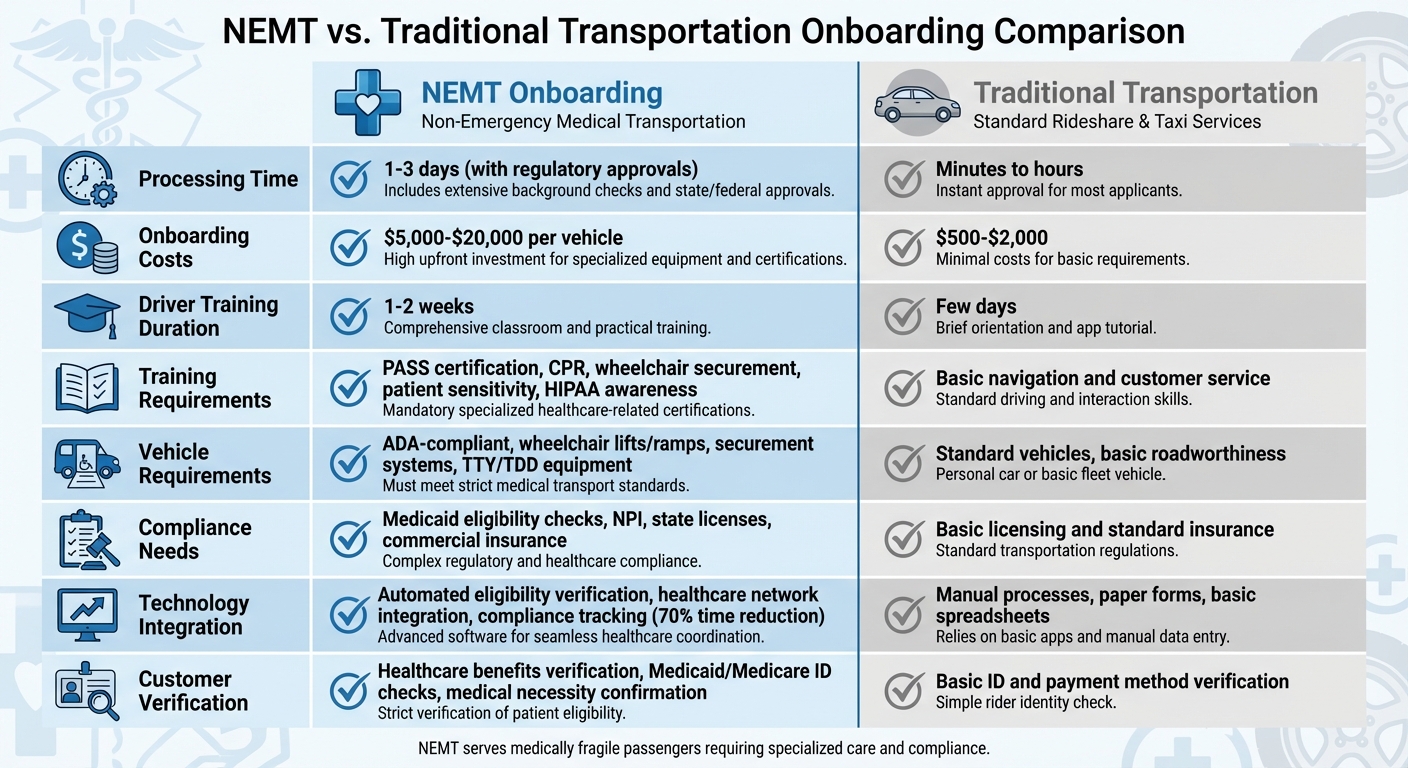
NEMT vs Traditional Transportation Onboarding Comparison
NEMT Driver Training and Certification
Customer Verification and Eligibility Checks
NEMT (Non-Emergency Medical Transportation) and traditional transportation services operate on entirely different principles when it comes to verifying passengers. For NEMT providers, confirming that each passenger qualifies for medical transportation benefits is a must before any trip can proceed. On the other hand, traditional transportation services are much simpler - if you can pay, you're good to go. This distinction highlights the contrasting approaches to user verification in these models.
Automated Eligibility Verification in NEMT
For NEMT providers, verifying healthcare benefits and medical necessity is central to their operations. This involves checking the rider's Medicaid or Medicare ID, confirming the plan's active status, and ensuring the trip aligns with coverage rules. These rules typically include approved medical appointments, designated destinations, and sometimes even mileage limits or prior authorizations. In many states, providers must also verify eligibility through specific brokers before dispatching a trip. Failure to confirm eligibility can result in non-payment for the trip.
Modern NEMT software has stepped in to streamline this process. By integrating with real-time Medicaid APIs, these platforms can instantly check a member's status, plan coverage, and whether the trip falls within the service region. This reduces manual errors and minimizes claim denials. At the time of pickup, drivers verify essential passenger details - such as name, date of birth, or the last four digits of the member ID - and log this information. Some states even require periodic rechecks to ensure ongoing compliance. This meticulous documentation not only protects providers during audits but also ensures they receive proper reimbursement.
Customer Verification in Traditional Transportation
In contrast, traditional transportation services like taxis, rideshares, and public transit focus on verifying basic identity and payment methods - and that's about it. Rideshare platforms, for instance, require an email address, phone number, and payment card during signup. Taxis often accept cash without any formal identity verification beyond what the driver observes. Public transit systems rely on fare cards or passes, with identity checks limited to issuing discounted passes for seniors or individuals with disabilities.
The anti-fraud measures in these services are geared towards ensuring payment security and protecting the platform, not adhering to Medicaid regulations. The onboarding process is quick and straightforward, with no regulatory hurdles tied to health benefits. Once your account is set up (or you have cash in hand for a taxi), you're ready to ride. This simplicity stands in stark contrast to the rigorous compliance and verification processes required in NEMT.
Driver and Vehicle Onboarding Requirements
When it comes to onboarding, the differences between Non-Emergency Medical Transportation (NEMT) services and traditional transportation options like taxis or rideshares are striking. NEMT providers operate under stricter guidelines due to the nature of their passengers - individuals who are often medically fragile or part of Medicaid and Medicare programs. These higher standards ensure compliance with healthcare regulations and prioritize passenger safety, a stark contrast to the faster, less rigorous onboarding processes of traditional services.
NEMT Driver and Vehicle Requirements
NEMT drivers go through an extensive onboarding process that goes far beyond holding a valid driver’s license. Providers conduct thorough criminal background checks, motor vehicle record (MVR) reviews, drug testing, and medical exams. But what truly sets NEMT apart is the specialized training drivers receive. Programs like PASS (Passenger Assistance Safety and Sensitivity) certification teach drivers how to assist passengers safely and with sensitivity to disabilities. Training in wheelchair securement ensures mobility devices are properly handled, while CPR, AED operation, and basic vitals assessment prepare drivers to respond to emergencies. Additionally, HIPAA awareness training is mandatory, emphasizing the importance of maintaining patient privacy throughout the trip.
The vehicles used in NEMT services also meet rigorous standards. They must comply with the Americans with Disabilities Act (ADA), featuring wheelchair ramps or lifts, securement systems, space for service animals, and even TTY/TDD equipment for passengers who are deaf or hard of hearing. The fleet is diverse - wheelchair vans, ambulettes, regular vans for ambulatory patients, and stretcher vans for those needing monitored transport. Each vehicle undergoes regular safety and accessibility inspections, with detailed documentation kept for state agencies and payers. Accessible vans and minibuses, depending on modifications, cost anywhere from $16,000 to $83,000 in the U.S. Additionally, drivers must carry commercial NEMT auto insurance, which comes with higher premiums compared to standard policies.
Traditional Transportation Requirements
In comparison, traditional transportation services like taxis and rideshares have a much simpler onboarding process. Drivers typically need a valid driver’s license, a basic background and MVR check, and standard vehicle insurance. Many rideshare platforms handle these checks digitally, allowing drivers to start within just a few days. However, training in areas like disability assistance, medical emergencies, or patient privacy is practically nonexistent. The focus is instead on navigation, customer service, and using the platform’s app.
The vehicles in traditional transportation services are usually standard sedans, SUVs, or vans with no accessibility modifications. Inspections are limited to ensuring roadworthiness - checking brakes, lights, and tires - without requiring patient safety equipment or ADA compliance. This streamlined process allows drivers to start earning quickly and keeps vehicle costs relatively low. However, it often leaves passengers with complex needs underserved, as traditional services lack the specialized assistance, securement systems, and emergency readiness that NEMT providers offer.
Technology Use in Onboarding
NEMT providers rely on automation for credentialing and documentation, while traditional services stick to manual processes that are often slow and prone to errors. This difference highlights a clear gap in efficiency and compliance between the two approaches.
Software-Based Onboarding in NEMT
NEMT providers leverage specialized software that connects directly with healthcare networks, including Medicare and Medicaid brokers. These platforms automate tasks like eligibility checks, driver certification updates, and vehicle inspection scheduling. They also send alerts for expiring certifications or upcoming inspections, reducing onboarding time by as much as 70%.
Beyond streamlining administrative tasks, NEMT software offers features like route optimization for wheelchair accessibility, real-time equipment status updates, and curbside support notifications. This level of integration simplifies the onboarding process for both patients and drivers. By partnering with brokers through these platforms, NEMT providers gain quicker access to Medicare and Medicaid networks, speeding up operations on all fronts.
Manual Processes in Traditional Services
Traditional transportation services, on the other hand, rely heavily on manual systems, including paper forms and phone-based verifications. Customer information is often managed using basic spreadsheets or general-purpose applications that aren’t tailored to transportation needs. This outdated approach frequently leads to bottlenecks, with onboarding processes stretching out over several days or even weeks as documents slowly pass through multiple layers of approval.
Errors are common in manual systems - forms can be misread, verifications missed, and delays compounded. Without automated compliance tools, managers must painstakingly ensure that drivers meet all necessary requirements. Unlike NEMT software, which flags issues instantly, traditional methods often uncover problems only after delays or compliance breaches occur. Additionally, the lack of integration with healthcare systems makes it difficult for traditional services to meet the stringent medical compliance and documentation standards required in the NEMT industry.
sbb-itb-cef70f4
Side-by-Side Comparison of Key Differences
When comparing onboarding processes, the contrast between NEMT (Non-Emergency Medical Transportation) and traditional transportation becomes clear in terms of time, cost, and specific requirements.
For NEMT, onboarding typically takes 1–3 days and costs between $5,000 and $20,000 per vehicle, while traditional onboarding is much quicker - completed in minutes - and costs around $500 to $2,000. Though the NEMT process takes longer, it offers immediate access to pre-screened medical transportation clients through broker partnerships. These partnerships often secure hospital and MCO approvals within 24–48 hours after submitting the National Provider Identifier (NPI).
The cost difference stems from NEMT’s specialized needs, including vehicle modifications, compliance fees, and advanced driver training, compared to the basic licensing and insurance requirements for traditional transportation.
| Factor | NEMT Onboarding | Traditional Transportation Onboarding |
|---|---|---|
| Processing Time | 1–3 days (involves regulatory approvals and eligibility checks) | Minutes to hours (basic ID verification) |
| Compliance Requirements | Requires NPI, state licenses, ADA-compliant vehicles, and PASS training certification | General driver's license, basic vehicle inspection, and standard insurance |
| Training Needs | Specialized training (e.g., wheelchair securement, PASS certification, CPR, patient sensitivity) | Basic training (customer service and safe driving) |
| Vehicle Requirements | ADA-compliant vehicles with lifts and wheelchair securement systems | Standard vehicles without accessibility modifications |
| Onboarding Costs | $5,000–$20,000 per vehicle (includes equipment, training, and compliance fees) | $500–$2,000 (covers licensing and basic insurance) |
NEMT’s specialized nature also extends to driver training. NEMT drivers typically undergo 1–2 weeks of training, covering wheelchair securement, PASS certification, CPR, and patient sensitivity. In contrast, traditional drivers complete only a few days of training focused on customer service and navigation. These unique demands highlight the operational adjustments required to enter the NEMT sector.
Best Practices for NEMT Onboarding
Using Technology to Improve Efficiency
Specialized NEMT software can make onboarding smoother by cutting down on paperwork and simplifying compliance. With these tools, operators can store key documents like driver licenses, vehicle insurance, training certificates, and background checks in a single system. They also help by automatically flagging expiring certifications - such as CPR, PASS training, or vehicle inspections - so nothing gets overlooked.
Digitizing documents and setting up automated reminders for renewals can save a lot of hassle. Features like electronic trip logs and digital signatures make audits less stressful, while integrated routing and GPS tracking minimize scheduling errors. These tools not only speed up the onboarding process for new drivers and vehicles but also set the stage for smoother day-to-day operations.
Partnering with Healthcare Providers
While technology helps with internal processes, building strong relationships with external partners like MCOs, hospitals, and clinics is equally important. These partnerships ensure steady trip volumes and revenue. Many healthcare providers have formal vendor onboarding programs that outline specific requirements for credentialing, quality standards, and data sharing.
To meet these expectations, operators should prepare a detailed compliance package covering vehicle specifications, driver training, insurance coverage, ADA readiness, and technology capabilities. New operators should research local MCOs and hospital systems and request to join their transportation vendor panels. Being ready to complete credentialing packets and share policies on safety, incident reporting, and scheduling tools can strengthen these relationships and make onboarding new patients a seamless process.
Training Drivers and Staff
Technology and partnerships are important, but ensuring staff are well-trained is essential for meeting NEMT's high standards. Pre-service training for drivers should include PASS certification, wheelchair securement, and basic emergency response skills. While NEMT staff don't require the same level of training as ambulance personnel, a solid foundation in emergency medical knowledge can enhance both safety and service quality.
Ongoing training is just as crucial. Regular refresher courses on safety protocols, compliance, communication, and technology help maintain skills and reduce risks. Real-time tracking systems can monitor driver performance, pinpoint areas for improvement, and tie training records to trip assignments - for instance, assigning wheelchair trips only to PASS-certified drivers. This approach reinforces high standards in daily operations and highlights the importance of comprehensive NEMT onboarding practices.
Conclusion
NEMT onboarding stands apart from traditional transportation services due to its focus on compliance, technology, and patient-focused care. While taxis and rideshares rely on simple ID checks and manual booking systems, NEMT employs more advanced procedures and safety measures. This difference directly improves service quality and ensures better outcomes for patients.
Technology plays a key role in NEMT's success. Software systems manage crucial tasks like Medicaid eligibility verification, route planning, and real-time tracking. This minimizes errors and reduces wait times - problems that often arise with manual dispatch methods. Unlike traditional services, which may leave mobility-impaired patients waiting at the curb, NEMT offers door-through-door assistance. These technological advancements not only make operations smoother but also prioritize patient safety, reinforcing earlier points.
Additionally, as highlighted, the tailored approach of NEMT sets it apart. Although it involves higher initial costs, these expenses result in dependable, safe services trusted by healthcare providers. Traditional transportation lacks the medical-specific features necessary for patients with complex needs, making it an unsuitable option for such individuals. In the end, NEMT onboarding's forward-thinking methods create a dependable, patient-first model that traditional services simply cannot replicate.
FAQs
What training do NEMT drivers need that sets them apart from traditional transportation drivers?
Non-Emergency Medical Transportation (NEMT) drivers receive specific training to handle passengers with medical or mobility challenges. This includes learning patient safety protocols, mastering mobility assistance techniques like handling wheelchairs or stretchers, and maintaining HIPAA compliance to safeguard patient privacy.
On the other hand, traditional transportation drivers are trained mainly in driving and general customer service, without the added focus on medical or accessibility needs.
How does NEMT stay compliant with healthcare regulations during onboarding?
NEMT takes healthcare compliance seriously during the onboarding process by implementing strict protocols to protect sensitive information and meet industry standards. This involves steps like verifying required documentation, performing real-time background checks, and strictly following HIPAA regulations to ensure patient data remains secure.
By focusing on precision and security, NEMT builds trust and reliability, giving both clients and healthcare providers peace of mind in the service they’re receiving.
Why does onboarding for NEMT services cost more than traditional transportation?
Onboarding for non-emergency medical transportation (NEMT) services requires extra steps to align with strict healthcare regulations and prioritize passenger safety. This process typically includes thorough background checks, specialized training for drivers, and higher insurance coverage.
Unlike standard transportation services, NEMT must adhere to healthcare-specific standards, which adds to both the time and expenses involved. These efforts are critical to ensure safe and dependable transportation for individuals with medical needs, making the onboarding process more detailed and demanding.


