How to Start an NEMT Business: The Complete 2027 Guide to Licensing, Costs and Launch


The operator's publication for non-emergency medical transportation. State licensing guides, broker intel, a 2,000+ provider directory and The Dispatch, our weekly newsletter.
Starting a non-emergency medical transportation (NEMT) business is one of the more accessible ways into healthcare logistics: you can launch a single-vehicle operation for roughly $10,000 to $40,000 and be billing trips within about 60 to 120 days in most states. The margins are real, and the demand is structural: an aging population, Medicaid transportation mandates and hospital discharge volume aren't slowing down. But the businesses that survive past year one are the ones that get licensing, insurance, and broker credentialing right before they buy a van. This guide walks the full path: the plan, the paperwork, the money, the vehicles, the drivers, and the trips.
What NEMT is and who actually pays you
NEMT moves people who can't safely drive themselves to non-emergency medical care: dialysis, chemo, wound care, physical therapy, adult day programs, hospital discharges. It is not an ambulance service. Your revenue comes from three channels, and knowing the mix before you start determines everything downstream:
- Medicaid brokers (Modivcare, MTM, Access2Care, Verida and state equivalents): steady volume, lower per-trip rates, slow onboarding, strict compliance. This is where most new operators get their first trips.
- Facility contracts: dialysis centers, skilled nursing facilities, hospitals. Higher-value, relationship-driven, and the fastest path to predictable revenue.
- Private pay: self-paying seniors and families. Best margins, no broker middleman, but you have to market for it.
A common mistake is building the whole business around Medicaid broker trips at rock-bottom reimbursement, then wondering why the margins don't work. Plan for a blend from day one.
What changes for new operators in 2027
Three federal Medicaid changes land between now and early 2027, and each one affects how many trips there are and how carefully you check them:
- Work requirements. States must have Medicaid work requirements in place for expansion adults by December 31, 2026, with some states allowed extensions to 2028. Members who fall off coverage stop generating trips.
- Six-month renewals for expansion adults, instead of yearly, mean more members cycling on and off coverage.
- Shorter retroactive coverage from January 1, 2027: one month for expansion adults and two months for other members. A trip for someone whose coverage lapsed is a trip you may not get paid for.
The practical takeaway: check Medicaid eligibility at trip intake, every time, and build a revenue mix that does not depend on one payer. States are also tightening enforcement. Minnesota, for example, froze new NEMT enrollments in the Twin Cities metro through January 2027. Read your state's rules before you spend anything.
The order that saves you money
Most failed launches do the right steps in the wrong order: they buy the van first, then find out insurance costs more than the payment and the broker is not adding providers. Do it in this order instead:
| # | Step | Done when |
|---|---|---|
| 1 | Check demand and payers | You know which brokers, plans and facilities serve your area, and at least one is adding providers |
| 2 | Form the business | LLC, EIN, bank account and NPI in hand |
| 3 | Quote insurance | Written quotes at the limits your target broker requires |
| 4 | State and local authority | Your state permit or certificate is filed, plus any county for-hire license |
| 5 | Medicaid enrollment | Application submitted, background studies started |
| 6 | Broker and plan credentialing | At least one contract in process, ideally two |
| 7 | Vehicle | Bought or leased only after steps 3 to 6 are moving |
| 8 | Drivers and training | Files complete: license, background check, drug test, required training |
| 9 | Software, rates, launch | Dispatch and billing set up, rates priced on your real cost per trip |
Step 1: Write the business plan and pick a structure
Before you spend a dollar on a vehicle, do two things: research your local market and choose your legal structure.
Market research that actually matters
Count the dialysis centers, SNFs, and adult day programs in your service radius, those are your demand anchors. Identify the Medicaid broker(s) operating in your state and whether they're accepting new providers (some markets are saturated; some are begging for capacity). Look at who else holds contracts. If three established providers already own every facility relationship in town, plan to compete on private pay and niche routes instead.
Business structure
Most NEMT operators register as an LLC: it separates personal assets from business liability, which matters enormously in a business where you're transporting vulnerable passengers. Register with your Secretary of State, get an EIN from the IRS (free), and open a business bank account. Sole proprietorships are cheaper to start but leave you personally exposed; that's rarely worth it here.
Step 2: Register, license, and credential
This is the step that separates operators who launch from operators who stall. NEMT licensing is state- and often county-specific: so treat the list below as the categories you'll need, then confirm exact requirements with your state Medicaid agency and DOT.
- Business registration: LLC filing, EIN, local business license.
- State NEMT / vehicle-for-hire authority: many states require a specific NEMT operating authority or a livery/vehicle-for-hire permit. Some route this through the state DOT, others through the health department or a broker enrollment process.
- NPI number: Medicaid and most brokers require a National Provider Identifier. It's free through the NPPES registry. A company applies for a Type 2 (organization) NPI under its EIN, not the owner's personal one. Our NPI guide for NEMT companies covers the application and which taxonomy code to pick.
- Broker credentialing: each Medicaid broker has its own provider enrollment: proof of insurance, vehicle inspections, driver background checks, and a signed contract. Budget 30 to 90 days for this; it's the single biggest timeline risk in your launch.
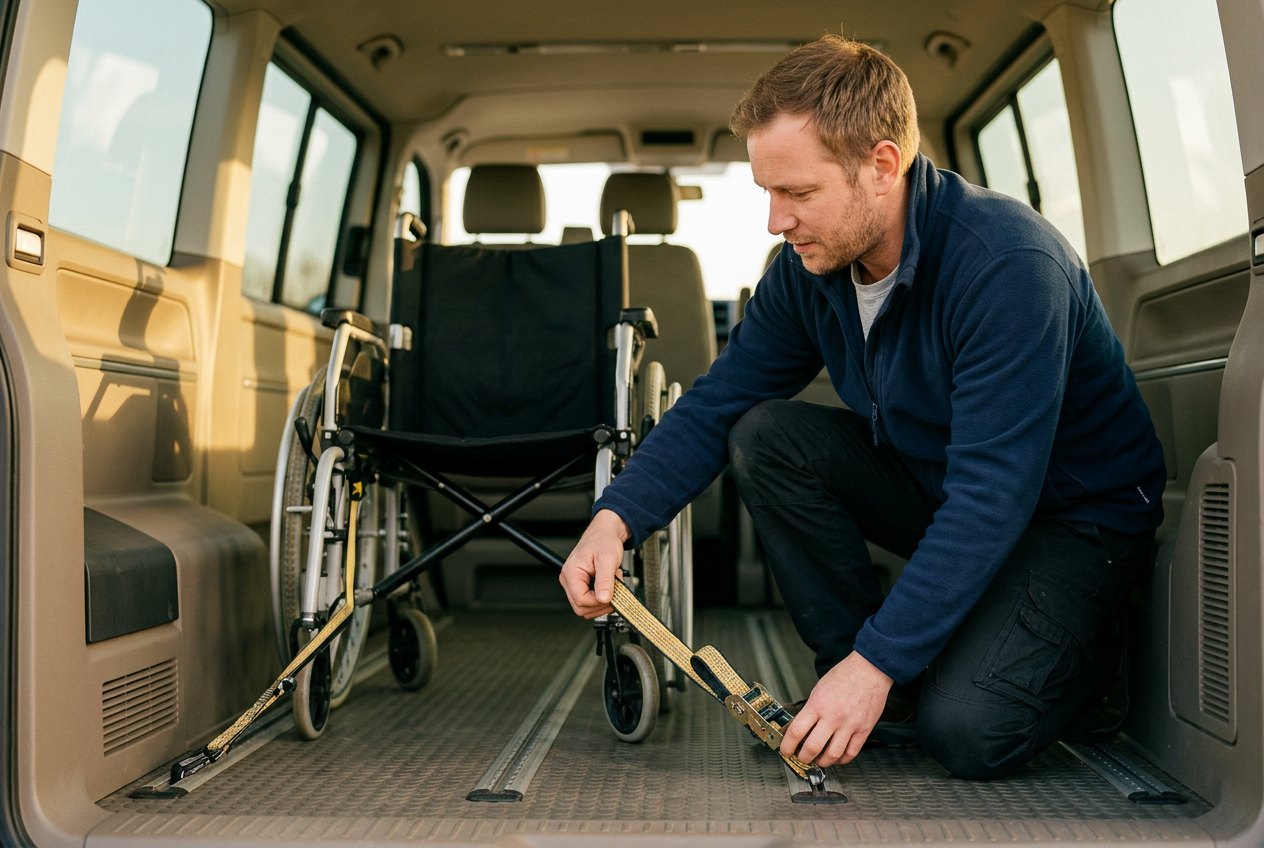
- Vehicle inspections & driver credentials: DOT inspections, driver medical cards where required, defensive-driving and passenger-assistance certifications, and (for stretcher/wheelchair transport) securement training.
State-by-state licensing guides
Each state splits NEMT authority differently. Start with your state:
More states are added every other week.
Step 3: Get your insurance right
Insurance is your largest recurring cost and a hard requirement for every broker contract. At minimum you'll carry commercial auto liability (brokers commonly require $1M combined single limit), general liability, and workers' compensation once you have employees. Many operators add professional/passenger liability given the vulnerable population. Get quotes from carriers that specialize in NEMT, generalist commercial-auto insurers often either decline the risk or price it punitively. Expect insurance to be one of the two or three line items that make or break your unit economics, so quote it before you commit to a vehicle or a broker rate.
Step 4: Compliance: ADA, Medicaid and HIPAA
Three compliance regimes govern NEMT. ADA dictates vehicle accessibility and passenger accommodation. Medicaid rules govern trip eligibility, documentation, and billing, get the trip authorization and signature requirements wrong and your claims get denied. HIPAA applies because you're handling protected health information every time you take a trip manifest. Build simple, documented policies for each from day one; retrofitting compliance after you've scaled is painful and expensive.
Step 5: Startup costs and how to fund them
Here's a realistic range for a single-vehicle launch. Your numbers will vary by state and by whether you buy new, buy used, or lease.
| Cost item | Typical range |
|---|---|
| Vehicle (used accessible van to new) | $8,000 to $55,000 |
| Wheelchair lift / accessibility retrofit | $3,000 to $15,000 |
| Commercial insurance (annual) | $5,000 to $12,000+ |
| Licensing, registration, permits | $300 to $3,000 |
| Scheduling / dispatch software | $0 to $300/mo |
| Branding, website, initial marketing | $500 to $3,000 |
| Working capital (fuel, maintenance, payroll buffer) | $5,000 to $10,000 |
Want your own number instead of a range? The NEMT startup cost calculator builds one for your state, your service type and how you get your vehicles, including the working capital to carry you until broker payments arrive.
Funding options, including the low-cost path
You do not necessarily need cash for all of it up front. Realistic funding routes:
- Vehicle leasing or financing instead of buying, the fastest way to cut your startup number, at the cost of a monthly payment.
- SBA microloans and small business loans: designed for exactly this kind of equipment-plus-working-capital launch.
- Grants and public programs: some states and localities offer transportation or small-business grants, and FTA Section 5310 funding supports transportation for seniors and people with disabilities (typically via nonprofits and partners).
- Partnering with healthcare providers or existing operators: a facility that needs reliable transport may help you get started in exchange for guaranteed capacity. This is the core of a genuine "start with almost no money" path: land the demand first, then finance the vehicle against contracted revenue.
The lowest-capital way in is a single used accessible van, leased or financed, insured through an NEMT specialist, credentialed with one broker and one facility contract lined up before you take delivery.
Before you commit, run your own numbers with the cost per trip calculator.
Step 6: Choose your vehicles and equipment
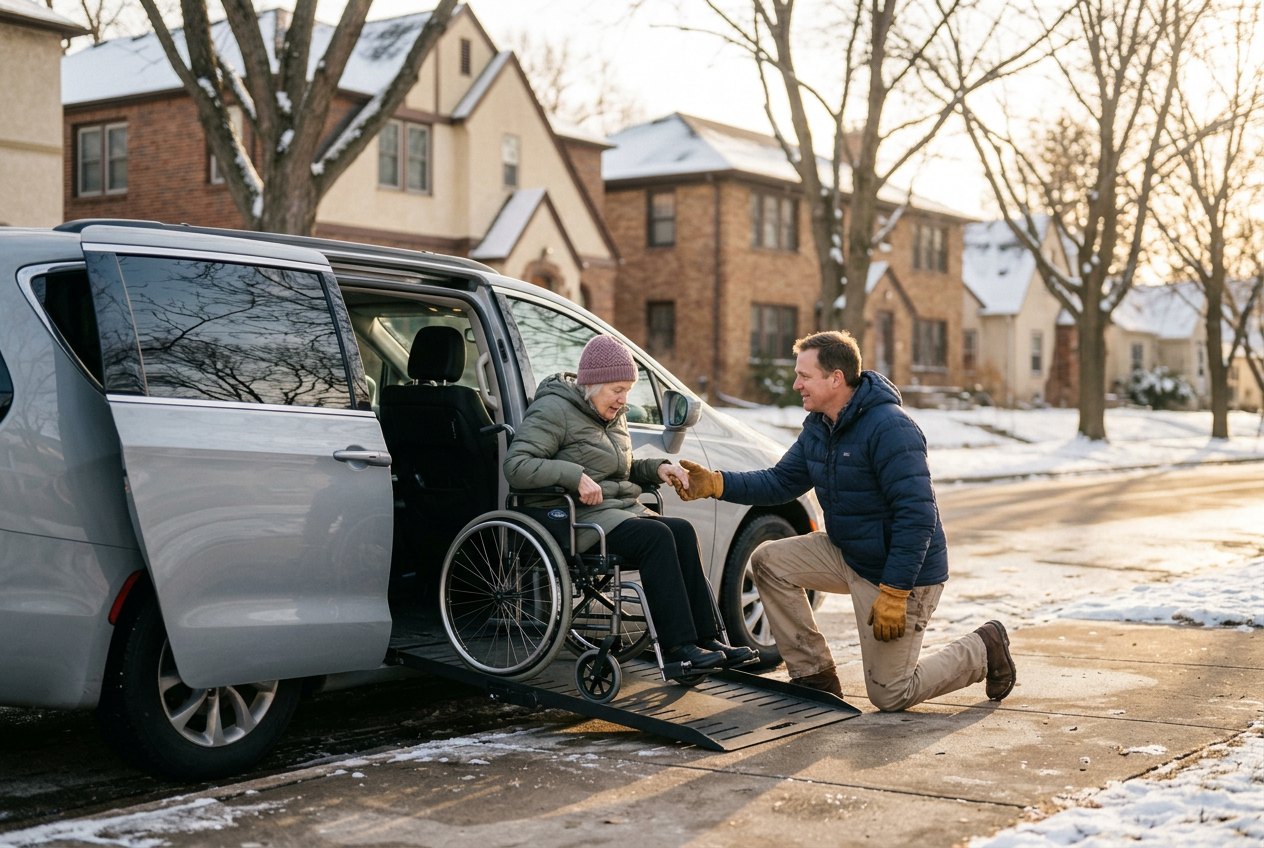
Your vehicle mix follows your passenger mix. Ambulatory-only passengers can ride in a standard minivan; wheelchair passengers need a lift- or ramp-equipped accessible van; stretcher transport requires a specialized vehicle and trained operators. Lease vs. buy comes down to capital and utilization: buying used is cheapest long-term if you can cover the outlay and maintenance; leasing preserves cash and simplifies fleet turnover. See what a medical transport van costs and test one van against your expected trips with the vehicle break-even calculator. Start with one vehicle matched to your most reliable demand, prove the routes, then add capacity against real trip volume, not optimism.
Step 7: Hire and train your drivers
Your drivers are your service. Beyond a clean driving record and background check, NEMT drivers need passenger-assistance and sensitivity training, wheelchair securement competency, basic first aid/CPR, and defensive driving. In a business built on facility relationships and broker on-time metrics, one careless or untrained driver can cost you a contract. Build a simple onboarding checklist and document every credential, brokers audit this.
Step 8: Set up technology and operations
Even a single-van operation drowns in manual scheduling fast. Trip intake, dispatch, routing, and billing are the four operational muscles you'll use every day. Dedicated NEMT scheduling and dispatch software automates trip intake from broker portals, optimizes routes to cut deadhead miles, and produces the trip documentation you need for clean claims. You can start with spreadsheets, but most operators who intend to grow adopt purpose-built software early (compare published prices and features in the NEMT software rankings) because manual dispatch caps how many trips one person can run and invites the billing errors that trigger denials.
Step 9: Set your rates and win your first trips
Price against your real cost per mile plus a margin, not against whatever the broker offers. Medicaid broker rates are fixed and often thin, which is exactly why facility contracts and private pay matter to your blend. Land your first trips by enrolling with the active Medicaid broker(s) in your state, then walking into the dialysis centers, SNFs, and adult day programs in your radius with a simple pitch: reliable, on-time, credentialed transport. Facility relationships compound; one good contract becomes a reference for the next.
The five challenges that sink new NEMT operators and how to beat them
- Regulatory complexity → confirm licensing with your state Medicaid agency directly and use a compliance checklist; don't rely on forum hearsay.
- Underfunding → lease the vehicle, quote insurance first, and keep a working-capital buffer so slow broker payments don't sink you.
- An unreliable fleet → buy the right vehicle for your passenger mix and maintain it on schedule; a van in the shop is revenue on the floor.
- Thin margins on broker trips → build a blended revenue mix with facility contracts and private pay from the start.
- Manual operations that don't scale → adopt scheduling/dispatch software before volume outgrows your spreadsheet, not after.
Your launch checklist
- Research local demand (dialysis, SNF, adult day) and active Medicaid brokers
- Form an LLC, get your EIN and NPI
- Secure state NEMT authority, permits, and vehicle inspections
- Quote and bind NEMT-specialist insurance
- Credential with at least one broker; line up one facility contract
- Acquire one accessible vehicle matched to your passenger mix
- Hire and fully train/credential your driver(s)
- Stand up scheduling, dispatch, and billing
- Set cost-based rates and start booking trips
Start focused, get the compliance and insurance right before the vehicle, and build your trip mix deliberately. That's the difference between an NEMT business that's still running, and growing, in year two, and one that isn't.
Common questions about starting an NEMT business
How much does it cost to start an NEMT business?
A single-vehicle launch typically runs about $10,000 to $40,000, depending mostly on the vehicle and your insurance. Leasing or financing the vehicle is the biggest lever on that number. See the cost table above.
How long does it take?
Plan on roughly 60 to 120 days from forming the business to your first paid Medicaid trip. Broker and plan credentialing is usually the longest step, and some states are slower right now because of enrollment freezes and extra screening.
Do I need a license to start an NEMT business?
Almost always, but it is rarely called an "NEMT license." Depending on the state, it can be a Medicaid provider enrollment, a transportation department certificate, a health department license, a county for-hire permit, or several of these. Check your state guide above.
Can I start an NEMT business with one van?
Yes. Most operators start with one vehicle. The question is whether the trips you can actually get cover the van's monthly cost. Run the break-even calculator before you buy.