NEMT Entrepreneur provides expert insights, strategies, and resources to help non-emergency medical transportation professionals grow their businesses. Get industry-leading advice to succeed in NEMT.
Featured articles
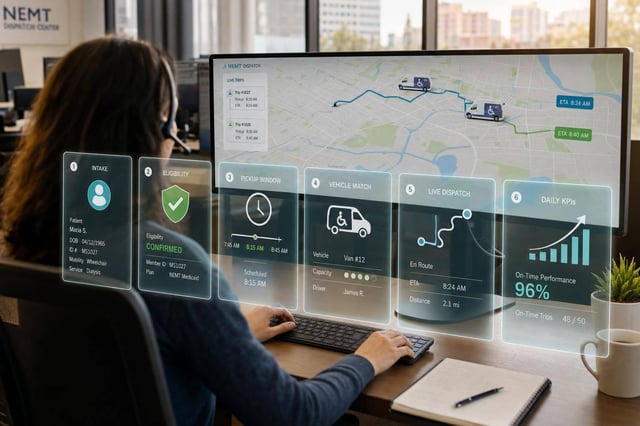
Dispatch is the engine room of an NEMT operation. It's also the first thing that breaks as you grow — manual scheduling caps how many trips one person can run and quietly generates the errors that become missed pickups and denied claims. Getting scheduling, dispatch, and booking right is what lets you add trips without adding chaos. Here's the operations playbook.
Automate your pre-scheduled trips
Most NEMT volume is predictable: standing dialysis runs, recurring appointments, facility contracts. Pre-scheduled trip automation handles these without manual re-entry every day — the system builds the schedule, assigns vehicles, and optimizes routes. When you evaluate automation software, prioritize the features that matter: route optimization, recurring-trip handling, and — critically — integration and compatibility with the broker portals and tools you already use. Software that doesn't connect to your trip sources just moves the manual work around.
Handle on-demand and dynamic scheduling
Not every trip is planned. Dynamic scheduling — slotting same-day and on-demand rides into an existing route — is where good dispatch earns its keep. It relies on GPS tracking to know where every vehicle is and auto-dispatch tools to assign the closest available driver, then re-optimizes on the fly as the day changes. The payoff is fewer deadhead miles and the ability to say yes to last-minute trips profitably.
Integrate booking and dispatch
The biggest hidden cost in NEMT operations is re-keying — trips coming in through one system and being manually retyped into another. Booking-dispatch integration connects trip intake directly to dispatch so a booked trip flows to a driver without a human copying it. The benefits: fewer data-entry errors, faster turnaround, and a dispatcher who manages exceptions instead of transcribing every ride.
Keep everyone updated with real-time trip status
Facilities, brokers, and families all want to know where the ride is. Real-time trip status updates — live vehicle tracking, automated arrival and delay alerts, and status that syncs back to your NEMT software — cut the flood of 'where's my ride' calls and protect your on-time reputation. Proactive updates turn a late trip into a managed expectation instead of a complaint.
| Capability | What it solves |
|---|---|
| Pre-scheduled automation | Recurring trips without daily manual setup |
| Dynamic scheduling | Profitable same-day and on-demand rides |
| Booking-dispatch integration | Eliminates re-keying and its errors |
| Real-time status updates | Fewer calls, better on-time reputation |
Manage will-calls without derailing the day
Will-calls — unscheduled return trips triggered when a patient is ready — are the classic NEMT curveball. Manage them with clear protocols: a defined way to receive and prioritize the call, real-time communication with drivers, and reserved capacity or flex vehicles so a will-call doesn't blow up your scheduled routes. Handled well, they're a service advantage; handled badly, they wreck your on-time numbers.
Your dispatch operations checklist
- Automate recurring and pre-scheduled trips with route optimization
- Use GPS and auto-dispatch for dynamic, same-day scheduling
- Integrate booking and dispatch to kill re-keying errors
- Push real-time status and alerts to facilities and families
- Set will-call protocols with reserved flex capacity
Automate the predictable, stay agile on the unplanned, and connect intake to dispatch so nothing gets retyped. That's a dispatch operation that scales with your trip volume instead of buckling under it.