The operator's publication for non-emergency medical transportation. State licensing guides, broker intel, a 2,000+ provider directory and The Dispatch, our weekly newsletter.
Updated October 2026: unsourced statistics were removed, published broker on-time standards were added with links, and the FAQ was corrected to match.
Most NEMT delays start before the driver ever arrives. If I want fewer late pickups, I need to fix six things first: intake data, trip checks, pickup windows, driver/vehicle match, same-day updates, and end-of-day review.
Here’s the short version:
- Collect complete trip details so drivers know mobility needs, entrance notes, equipment needs, and return type before they leave.
- Verify eligibility and authorization first to avoid denied claims and wasted trips. Under Modivcare's Kansas provider manual, for example, a trip without a broker-assigned job number is not paid.
- Build realistic schedules using traffic, dwell time, and a per-pickup boarding buffer instead of map-only drive times.
- Match the right driver and vehicle to each trip, especially for WAV, stretcher, and bariatric runs.
- Use one documented communication flow for delays, no-shows, will-calls, and route changes.
- Review the day’s exceptions and KPIs so one bad route choice does not repeat tomorrow.
Published broker standards show how tight the bar is:
- SafeRide lists a 95% on-time performance rate among its provider expectations
- Modivcare's Kansas provider manual counts a pickup as late at more than 15 minutes after the scheduled time and caps late or missed pickups at 2% of assigned trips
- Massachusetts human service transportation standards set a 15-minute window on either side of the scheduled pickup, with a 100% on-time goal
If I had to boil the whole guide down to one point, it would be this: dispatch works best when the day is built early, tracked live, and reviewed before close. That means fewer rider delays, fewer missed appointments, and less stress across the board.
| Focus area | What I need to do | Why it matters |
|---|---|---|
| Intake | Get complete rider and trip details | Missing info leads to late pickups |
| Verification | Confirm eligibility, auth, and rider readiness | Stops claim issues and wasted runs |
| Scheduling | Use traffic-based timing and buffers | Keeps routes from falling apart early |
| Assignment | Match trip needs to vehicle and crew | Cuts preventable re-dispatch |
| Live dispatch | Use set statuses and documented updates | Keeps same-day changes under control |
| Closeout | Review late trips, mileage, and KPIs | Shows where delays start |
Use this as a simple playbook: clean data in, realistic schedule out, tight follow-up all day.
Sponsored video: a full-day scheduling and dispatch demo from Bambi, NEMTrepreneur's presenting sponsor. Shown as one example of the workflow above; other platforms are compared in our NEMT software rankings.
Build a Clean Intake and Trip Verification Process
A gap in the intake record is one of the most common reasons a rider gets delayed. One wrong entrance note, one missing mobility detail, or one unverified authorization number can throw off the whole route before the first pickup.
Collect the Trip Details Dispatch Needs
Complete intake cuts down on re-dispatch because drivers get the details they need before the vehicle leaves. Collect the rider’s full name, verified phone number, and caregiver or facility contacts. Add exact entrance notes for pickup and drop-off - side entrance, loading dock, building wing - because when a driver has to circle a large facility, those lost minutes spill into every stop after that.
You also need the appointment date and time in U.S. format, the requested pickup time, and whether the return is scheduled or will-call. Mobility details matter just as much: ambulatory, wheelchair, stretcher, or bariatric; equipment like a walker, cane, or oxygen; passenger weight for bariatric trips; and whether a two-person crew is needed. Escort or attendant needs should be listed too, along with barriers like stairs, elevators, or locked gates.
Ask what the rider needs to travel safely, not just where they’re going.
That gives dispatch what it needs to set the right pickup window and match the trip with the right vehicle.
Verify Eligibility, Authorization, and Rider Readiness Before Scheduling
Do not schedule a trip until eligibility and authorization are confirmed. Missed checks lead to denied claims and wasted driver time. Brokers spell this out: Modivcare's Kansas provider manual says only trips on the manifest with a Modivcare-assigned job number are authorized for reimbursement, and payment will not be made for trips without one. Verify the broker authorization or trip number, the service level - ambulatory, wheelchair, or stretcher - and whether the rider can transfer into a seat and sit upright for the full ride.
Rider readiness should be confirmed through reminders sent 24 hours and 1 hour before the pickup window. Automated reminders are a cheap first defense against no-shows. Measure your no-show rate before and after you turn them on.
For HIPAA-safe handling, drivers should only receive the details they need to complete the trip safely: mobility needs, entrance notes, and special instructions. Use role-based access and encrypted transfer so drivers only see trip data tied to safe transport.
Once the trip is verified, dispatch can place it on the schedule without a scramble at the last minute.
Intake Workflow Comparison by Delay Risk
How trip data is collected has a direct effect on how much cleanup dispatchers deal with each morning. Some workflows leave a lot of room for missing details. Others do a much better job of keeping the day on track.
| Workflow Type | Data Completeness | Dispatcher Workload | Compliance Control | Risk of Preventable Delays |
|---|---|---|---|---|
| Paper Forms | Low - prone to missing fields and illegible notes | High - requires manual entry and physical filing | Low - difficult to audit or track HIPAA compliance | High - manual errors and lost forms are common |
| Digital Forms | Medium-High - required fields enforce data capture | Medium - automated entry reduces manual work | High - real-time eligibility checks and digital access logs built in | Low - automated reminders and GPS tracking reduce errors |
| Integrated Broker Feeds | High - direct data sync from portals like Modivcare and MTM | Low - trips populate the dashboard automatically | Medium - relies on the broker's initial verification | Moderate - risk of unassigned trips or data loss during system handoffs |
Integrated broker feeds cut down on transcription mistakes, but a broker-confirmed request still needs dispatcher review for vehicle fit, timing, and coverage. That matters even more for stretcher and bariatric trips, where an equipment mismatch can stop an assignment cold.
With clean intake in place, the next step is turning that data into realistic pickup windows and assignments.
Schedule and Assign Trips for Realistic On-Time Performance
Clean intake only helps if the manifest can actually work in the field.
Set Pickup Windows and Travel Times Based on Real Conditions
The scheduling mistake operators make most often is simple: they plan around ideal drive times instead of what roads look like in practice. That’s how a clean-looking schedule falls apart by 8:30 AM.
Build pickup windows from actual traffic patterns, not best-case maps. Then add a boarding buffer per pickup, sized from your own GPS dwell times rather than a guess. That extra time matters. At high-volume facilities, vehicles often sit longer than expected, so that dwell time needs to be built into the window before the vehicle is assigned.
The strongest teams don’t wait until the morning rush to build the next-day manifest. They finish it by 4:00 PM the day before. Trips requested after that cutoff should go into a will-call queue.
Before the schedule goes live, flag any infeasible trip pair where the gap between stops is shorter than the calculated travel time plus the boarding buffer. Inside each geographic cluster, sort trips by the earliest appointment window so the route moves in a logical order.
Build the manifest the night before. Morning builds usually turn dispatch into firefighting.
Match Drivers and Vehicles to Trip Requirements
Once the pickup window works on paper, the next step is pairing the trip with the right crew and vehicle.
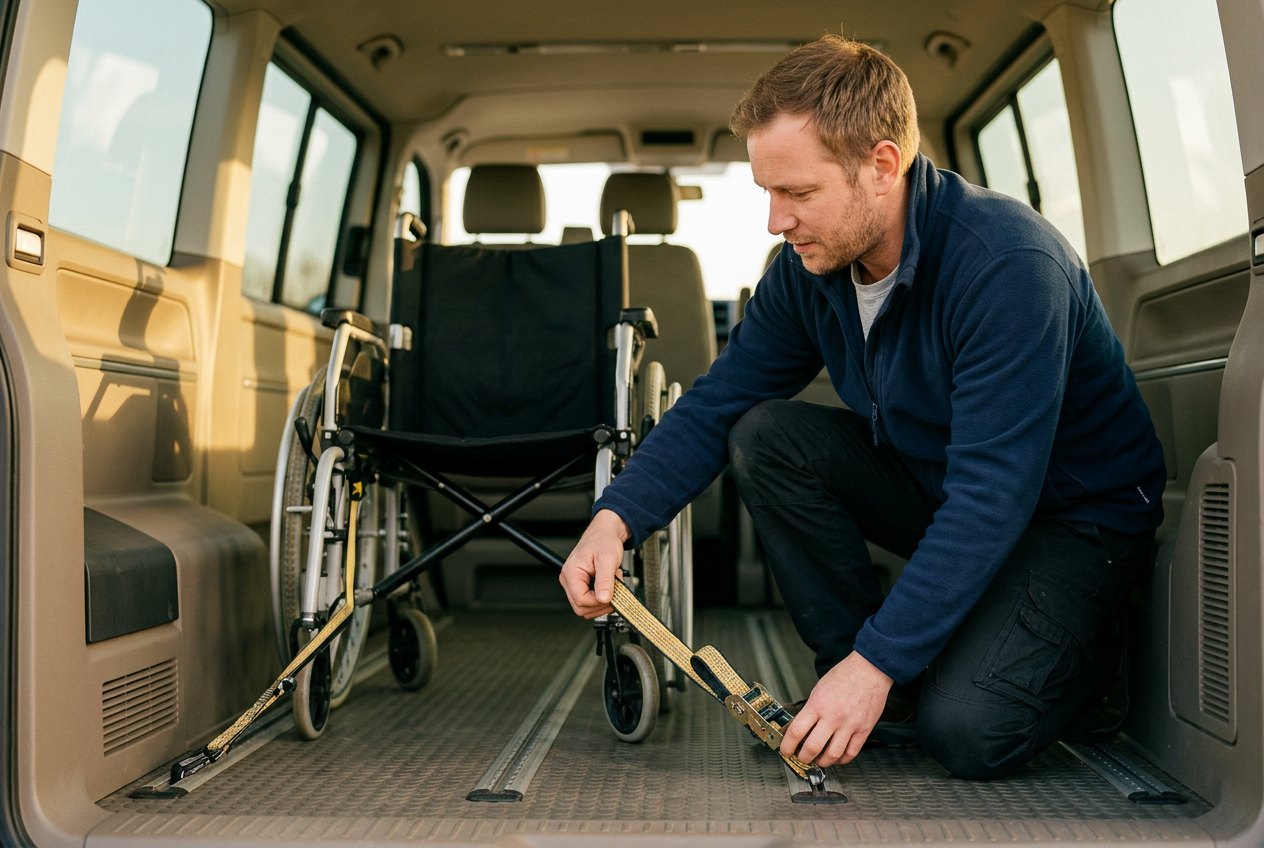
Every trip needs the proper setup. Sending the wrong vehicle leads to delays, reschedules, and compliance risk. WAV trips need lift-trained drivers and WAV-equipped vehicles. Stretcher trips need specialized vans. Bariatric stretcher trips need a two-person crew .
Before publishing any assignment, run a credential check. If a driver’s DOT physical, MVR, or drug test is expired, do not publish the assignment. Equipment and credentials aren’t the whole story, either. Language fit matters. If a Spanish-speaking rider is paired with a driver who can’t communicate with them, boarding and handoffs can take longer.
Set WAV load caps from your own completed-trip data. Lift and securement time make a wheelchair trip longer than an ambulatory one, so a WAV route cannot carry a sedan route's trip count.
Assignment Method Comparison for Urban and Rural Routes
No single assignment method fits every market. Urban and rural service patterns behave differently, so the routing method should match the route type.
| Assignment Method | Impact on Rider Wait Times | Dispatch Complexity | Best Fit For |
|---|---|---|---|
| Geography-Based (Clustering) | Lowers wait times by reducing travel distance between pickups | Moderate - requires mapping tools and geo-clustering logic | Urban areas with high trip density |
| Facility-Based | Reduces delays at high-volume clinics and hospitals | Low - focuses on specific recurring locations | Dialysis centers and hospital discharge contracts |
| Time-Window-Based | Prioritizes on-time arrival for strict medical appointments | High - requires constant real-time adjustments | Critical care trips and rural routes with long distances between stops |
In urban markets, geographic clustering within a 5 to 8 mile radius cuts deadhead miles and helps drivers move from stop to stop with less wasted travel. Rural routes need tighter time-window control because long distances leave very little room to recover when one stop runs late.
Handle Same-Day Changes and Driver Communication in Real Time
Once the manifest goes live, dispatch stops being about planning and starts being about control. And that’s where the day can get messy fast.
Even a solid manifest will run into problems. A rider isn’t ready. A facility falls behind. A same-day add-on shows up out of nowhere. What matters is how dispatch reacts in that moment. A small delay can stay small, or it can snowball into five missed timings across the route.
Use Standard Status Codes and Escalation Rules
Use the same trip statuses across the board: assigned, en route, on site, rider on board, delayed, no-show, complete.
That shared language keeps everyone on the same page. If a driver marks a trip as delayed, dispatch should act right away: reroute the next stop, notify the facility, and update the rider ETA at once. Standard statuses make rerouting faster and help stop one delay from spilling into the rest of the route.
Handle No-Shows, Will-Calls, and Route Changes Without Losing Control
No-shows are one of the easiest ways for a route to drift off schedule. The damage often starts quietly.
If a driver arrives and the rider isn’t there, log the arrival time, log the contact attempts, wait through the boarding window, then mark the trip and move on.
Late requests need the same discipline. Keep them in the will-call queue and assign them only when a nearby vehicle opens up. If you force a late request into an active route, there’s a good chance the rest of the manifest starts slipping too.
When a facility runs late, contact the facility at once, update ETAs, and reroute idle drivers.
Driver Communication Channel Comparison for Speed and Documentation
In live dispatch, not every communication method does the same job. Fast matters. Having a record matters too, especially when a trip gets disputed or the schedule shifts midstream.
| Communication Channel | Response Speed | Reliability | Documentation | Compliance Risk |
|---|---|---|---|---|
| Phone Calls | Immediate | Moderate | Manual logs only | High - verbal, non-secure |
| Radio | Immediate | Low - coverage gaps | None | High - public, non-secure |
| Encrypted App Messaging | High | High | Automated audit trail | Low, if the vendor signs a business associate agreement |
Encrypted app messaging is the best fit for live dispatch because each update is timestamped and stored on its own. That gives dispatch both speed and a paper trail without the paper.
Send next-day manifests to driver apps by 7:00 PM and get acknowledgments by 9:00 PM. If an assignment or route change isn’t confirmed, push it into the next day’s exception review.
Review the Day, Fix the Process, and Cut Tomorrow's Delays
After the last trip, close the loop before tomorrow starts.
Reconcile Trips, Mileage, and Late-Service Exceptions
Start by checking each completed trip against the manifest, broker records, and GPS timestamps so every status change was recorded the right way. Then compare mileage logs with the manifest to confirm the trip was completed and to spot exceptions.
Write down every gap between the plan and what happened on the road. That includes late pickups, long wait times, no-shows, and missing status updates. These all belong in the exception log as reconciliation items for billing and root-cause review.
Group exceptions into clear buckets:
- Patient unreadiness
- Facility delay
- Traffic
- Driver issue
Any exception left unresolved can turn into tomorrow's delay source.
This step also protects revenue. Accurate, timestamped documentation can cut denied claims and delayed payments. Poor closeout does the opposite. It can also hide repeat delay patterns that keep showing up day after day.
Close same-day additions by 3:00 PM so dispatch can QA the manifest before driver release.
Track the KPIs That Show Where Delays Start
Use the closeout report to see if delays started in intake, scheduling, or execution.
Six numbers tell most of the story. Review them every day, not only when something breaks.
| KPI | Delay Source It Reflects | Dispatch Influence |
|---|---|---|
| On-Time Rate (OTP) | Schedule realism | Set realistic travel times and buffer zones |
| Average Delay Minutes | Execution and rerouting gaps | Real-time rerouting and traffic monitoring |
| No-Show Rate | Intake and rider readiness | Better intake verification and courtesy calls |
| Deadhead Miles % | Route design | Geo-clustering and trip chaining |
| Trip Completion Rate | Vehicle and driver matching | Vehicle/driver matching and backup planning |
| Cancellation Rate | Rider and facility readiness | Verification of rider readiness before scheduling |
On-time thresholds and penalties are set contract by contract, so read yours. Three published examples: SafeRide lists a 95% on-time performance rate among its provider expectations. Modivcare's Kansas provider manual (2022) counts a pickup as late at more than 15 minutes after the scheduled time, allows no more than 2% of assigned trips to be late or missed, warns that providers with more than 1% missed pickups may have their trips reduced, and treats habitual failure as a material breach. Massachusetts human service transportation provider standards (revised July 2022) set a 15-minute window on either side of the scheduled pickup and a 100% on-time goal, and providers who miss can face corrective action plans, a pause in new trips, fines, or termination.
Use this KPI data to brief drivers on traffic, discharge windows, and late facilities. A 15-minute huddle can turn yesterday's misses into today's plan. From there, feed those findings into the next day's manifest and driver brief.
Conclusion: The Dispatch Habits That Matter Most
Every delay starts somewhere. In most cases, it ties back to one of five issues: incomplete intake data, a trip that wasn't verified before scheduling, a route built without realistic travel time, a driver communication gap, or a same-day change that never got documented.
The fix is pretty straightforward:
- Collect complete intake data
- Verify trips before they reach the manifest
- Build routes around actual conditions
- Keep driver communication fast and documented
- Log every same-day change
- Review the day's numbers before closeout
Then use what you find to correct the same problems before they hit more riders tomorrow.
Good dispatch turns each day's exceptions into tomorrow's fix.
FAQs
What should dispatch prioritize first to reduce delays?
First, build a schedule before the day begins. Check patient eligibility, then group trips by location - ideally within a 5 to 8-mile radius. That cuts deadhead miles and keeps the day running with less waste.
Then shift to real-time monitoring. Use GPS tracking and automated software to catch traffic, driver issues, or other disruptions early. That gives dispatchers time to reroute trips or reassign them fast, instead of scrambling after delays pile up.
How can I improve on-time performance without overloading drivers?
Use data-driven planning and real-time visibility. Build the manifest the night before with geographic clustering and AI route optimization so schedules feel realistic instead of rushed. Match driver capacity to daily demand, using trips per shift from your own completed-trip data for each vehicle type.
Automated dispatch software helps you add buffer time in high-traffic corridors and avoid trip overlaps. Then, with real-time GPS monitoring, you can reassign trips early before a small delay turns into a fleet-wide mess.
Which dispatch KPIs matter most each day?
Focus on the daily KPIs that have the biggest impact on rider delays and service quality: on-time performance (SafeRide, for example, expects 95% from its providers), vehicle utilization, trip completion, no-show rates, and average wait times.
Checking these numbers every day helps dispatchers catch bottlenecks early and make fast route or schedule changes.