

The operator's publication for non-emergency medical transportation. State licensing guides, broker intel, a 2,000+ provider directory and The Dispatch, our weekly newsletter.
Most new NEMT drivers want to do the right thing. The trouble is that the first month on the road moves fast. Dispatch is calling, pickup windows are tight, riders have different mobility needs, and the vehicle becomes a rolling workplace with very little margin for confusion.
The early mistakes are usually not dramatic. They are small habits that seem harmless in the moment: rushing the greeting, assuming the rider can transfer without help, tightening one securement strap but not checking the others, or finishing a shift without writing down what was learned.
Those small habits matter because NEMT work is built on trust. Riders, families, employers, brokers, facilities, and auditors all depend on the driver to be calm, consistent, and able to show that basic training and procedures are being followed.
Here are three areas where new drivers often struggle in their first 30 days, and what operators can do to make those first weeks safer and more predictable.
Passenger assistance starts before the ride
A common rookie mistake is thinking passenger assistance begins when the rider is already at the vehicle. In practice, it starts earlier: when the driver reviews the trip notes, arrives at the pickup location, communicates clearly, and confirms what kind of help is expected.
A driver who pulls up, stays in the seat, and waits for the rider to appear may be technically "on time," but not actually ready to assist. Some riders need door-through-door support. Some need extra time to gather belongings, lock a door, or move from a residence to the vehicle. Some facilities have specific entrance rules or loading areas.
The better habit is to pause before the pickup and ask a few practical questions:
- Where exactly should I meet the rider?
- Does the rider use a wheelchair, walker, cane, oxygen, or another aid?
- Is there a caregiver, facility staff member, or family contact involved?
- Do I need to allow extra time for boarding?
This does not need to become complicated. It is basic preparation. A driver who knows the pickup is at a dialysis center should expect a different pace than a curbside pickup at a clinic. A driver picking up at an apartment building should think about parking, entry access, elevators, and safe walking distance before arriving.
The first conversation also matters. New drivers sometimes speak to the caregiver or front desk and barely address the rider. That can make the rider feel like cargo instead of a person. A simple direct greeting helps: "Good morning, I am here for your ride to the clinic. How would you like me to assist you today?"
That question does two things. It respects the rider's independence, and it prevents guessing. Many riders know exactly what kind of help they need. Some want an arm for balance. Some want the driver nearby but not touching them. Some need the driver to slow down, repeat instructions, or explain the next step before moving.
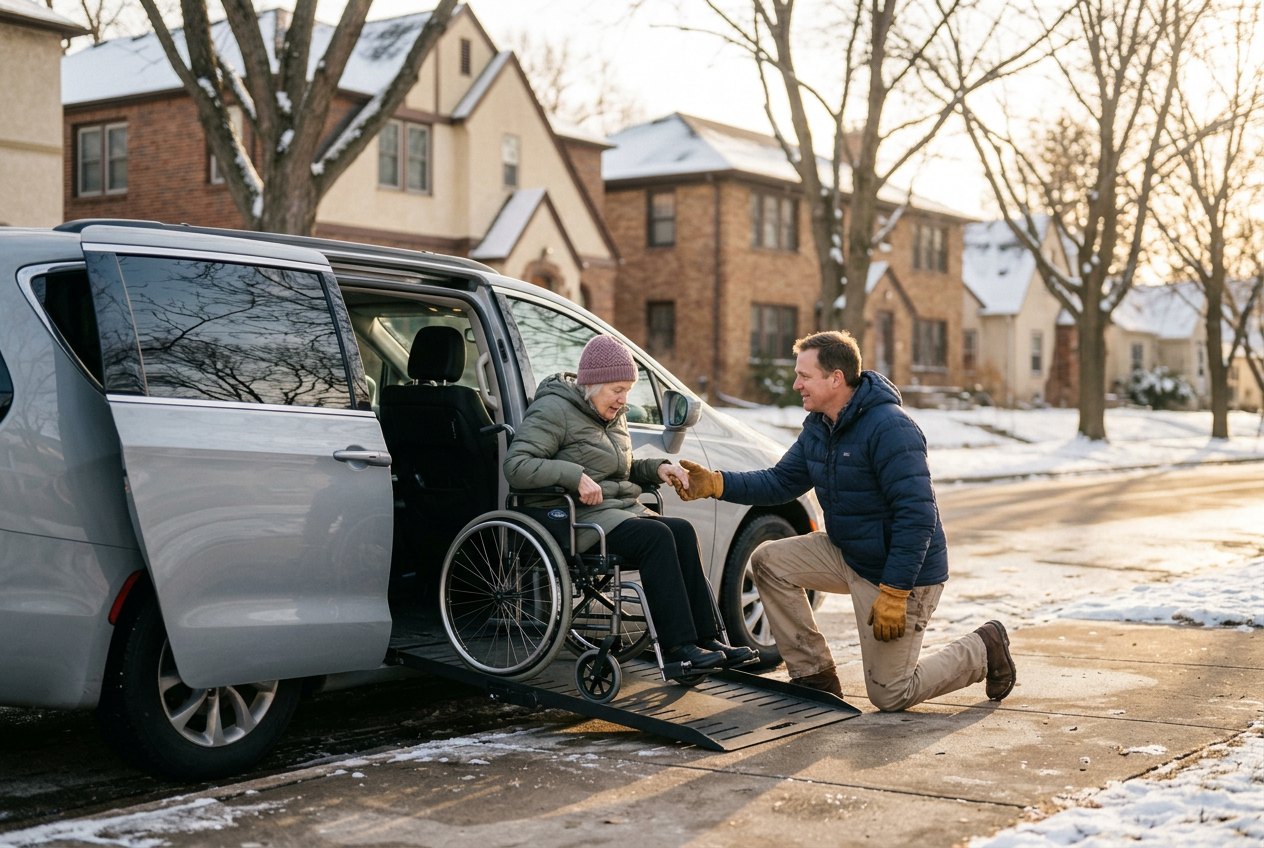
Boarding is another place where new drivers rush. They may hold the door but stand in the wrong spot, move too quickly, or fail to watch footing, weather, curbs, and uneven pavement. A safe boarding habit is simple: slow the pace, keep communication clear, and never assume the rider is stable just because they are standing.
The first 30 days should build the habit that every ride is a service interaction, not just a transport task. Good assistance starts with preparation, continues through respectful communication, and ends only when the rider is safely handed off at the destination.
Wheelchair securement mistakes create avoidable risk
Wheelchair securement is one of the highest-consequence areas for new drivers. The most common issue is not that drivers ignore securement altogether. It is that they rush the process, treat it like a checklist to get through, or rely on what "looked fine" last time.
A typical example: the driver is running five minutes behind. The rider is boarded, the lift is stowed, and dispatch is asking for an ETA. The driver attaches the front straps, glances at the rear straps, clicks the occupant restraint, and starts moving. Nothing seems wrong until a hard stop or sharp turn exposes slack, poor strap angle, or a missed check.
Operators can reduce this risk by teaching drivers a repeatable securement rhythm. The exact equipment and manufacturer instructions matter (our wheelchair securement training guide covers the basics), but the work habit is universal: slow down, attach intentionally, check tension and angles, confirm the occupant restraint, and do a final visual and physical check before moving the vehicle.
New drivers also confuse wheelchair securement with occupant restraint. Securing the mobility device is not the same thing as restraining the passenger. Both concepts matter. A wheelchair can be properly tied down while the rider's restraint is still routed poorly, too loose, or positioned in a way that does not match the intended use of the equipment.
Another mistake is failing to communicate during securement. Drivers may move around the chair, reach across the rider, or make adjustments without explaining what they are doing. That can be uncomfortable or alarming, especially for someone who has had rough transportation experiences before.
Clear narration helps: "I am going to secure the front points first, then the rear, then I will check your belt before we leave." It is short, respectful, and keeps the rider informed.
Drivers should also know when to stop and ask for help. If a wheelchair does not have clear securement points, if equipment appears damaged, if straps do not retract correctly, or if the driver is unsure whether a setup is safe, the wrong answer is to improvise quietly. The right answer is to pause, contact a supervisor, and document what happened.
Training refreshers are especially important during the first month. A new driver may pass initial training and still need coached repetition with real vehicles, real equipment, and real trip conditions. The goal is not to embarrass the driver. The goal is to turn securement from a nervous task into a steady habit.
Operators can help by building quick post-ride reviews into early onboarding. Ask questions like: What was the most difficult boarding today? Did any securement setup feel unfamiliar? Did the driver encounter a chair, ramp, lift, or restraint issue that needs follow-up? Those conversations catch weak spots before they become patterns.
Recordkeeping matters more than new drivers expect
New NEMT drivers often underestimate documentation. They may think the job is done when the rider is dropped off and the next trip is accepted. But transportation work leaves a trail: training records, trip notes, incident reports, vehicle checks, securement refreshers, and communications with supervisors or facilities.
The first 30 days are when documentation habits form. If a driver learns early that "I will write it down later" usually means "I will forget," the operator has a better chance of getting accurate records when they matter.
Consider a simple road example. A rider tells the driver that the pickup address has changed entrances because of construction. The driver finds the rider, completes the trip, and moves on. If that detail is not recorded or shared, tomorrow's driver may circle the wrong entrance, miss the pickup window, or frustrate the facility.
Another example: a securement strap did not retract smoothly, but the driver worked around it and finished the route. If the equipment concern is not documented, the next driver inherits the risk without context.
Documentation does not need to be long to be useful. Good records are timely, factual, and specific. "Rear passenger-side strap slow to retract; reported to supervisor after 10:15 pickup" is more useful than "strap issue." "Rider requested driver knock at side entrance due to front lobby closure" is more useful than "pickup confusing."
Training records are part of the same discipline. Employers, brokers, facilities, and auditors may ask for evidence that drivers completed required internal training or refreshers. When records are scattered across inboxes, paper folders, screenshots, and memory, the operator loses time and confidence.
New drivers should know from the beginning where their training completion records live, who maintains them, and what to do if a certificate, assessment, or refresher record is missing. Supervisors should avoid treating training records as an afterthought. They are part of the operating system of a compliant fleet.
Incident documentation deserves special care (see our incident reporting best practices). Drivers should be trained to write what they observed, what they did, who they notified, and when. They should avoid blame, assumptions, medical opinions, or emotional language. A clean incident note is not about protecting pride; it is about helping the company understand what happened and respond appropriately.
The habit to build is simple: if it affected safety, timing, equipment, rider assistance, facility coordination, or training status, it should be documented in the right place before the details fade.
How operators can support better first-month habits
Most first-month mistakes are training system problems before they are driver character problems. A new driver is trying to learn routes, riders, dispatch rhythm, paperwork, vehicle procedures, and company expectations all at once. Operators can make that learning curve safer by giving drivers a clear structure, built into a driver safety training program.
Start with a first-week checklist that covers passenger communication, boarding and handoff expectations, wheelchair securement practice, vehicle equipment location, incident reporting, and where training records are stored.
Pair new drivers with a supervisor or experienced driver for early ride reviews when possible. Even a short debrief at the end of the day can reveal patterns: rushing, unclear communication, missed notes, or discomfort with mobility equipment.
Make refreshers normal. If a driver struggles with securement in week two, that should not feel like failure. It should trigger more practice, clearer coaching, and documentation that the refresher happened.
Finally, keep the standard practical. Drivers need policies, but they also need road-ready habits they can remember when the schedule is full and the pickup is complicated: prepare before arrival, communicate directly, slow down during boarding, check securement every time, and document while the facts are fresh.
The first 30 days set the tone. When operators make those early habits visible, coached, and documented, new drivers are more likely to become steady professionals instead of simply surviving the route.