NEMT Entrepreneur provides expert insights, strategies, and resources to help non-emergency medical transportation professionals grow their businesses. Get industry-leading advice to succeed in NEMT.
Featured articles
Idle time in Non-Emergency Medical Transportation (NEMT) operations isn’t just wasted time - it’s lost money. Every minute a vehicle sits idle, costs like driver wages, fuel, insurance, and maintenance continue to add up, while revenue opportunities slip away. For NEMT providers already operating on thin margins, understanding and addressing idle time is critical to staying profitable.
Key Takeaways:
- Idle Time Costs: Driver wages (~$17/hr), fixed expenses (~$12.50/hr per vehicle), and missed trips can cost operators $30/hour or more for every idle vehicle.
- Revenue Loss: A poorly optimized vehicle completing 6–8 trips per day instead of 10–15 could lose $70–$245 daily - or up to $36,750 monthly for a five-vehicle fleet.
- No-Shows and Cancellations: A 20% cancellation rate across 1,000 trips could result in $7,000–$15,000 in monthly losses.
- Operational Challenges: Scheduling issues, inefficient routing, poor communication, and deadhead miles (empty trips) all contribute to idle time.
Solutions:
- Technology: Use real-time dispatch tools, route optimization software, and automated reminders to cut idle time by 30–70%.
- Scheduling Improvements: Consolidate trips geographically, reduce no-shows with patient reminders, and streamline communication with healthcare facilities.
- Performance Metrics: Track KPIs like idle time percentage, deadhead miles, and vehicle utilization to pinpoint inefficiencies and adjust operations.
Idle time not only drains profits but also impacts patient care. By reducing idle minutes, you can boost revenue, improve service, and strengthen relationships with Medicaid brokers and healthcare facilities.
$5M/Year Non Emergency Medical Transportation (NEMT) Business | NEMT Experts Podcast Episode 60
Financial Costs of Idle Time
Idle time can be a major financial drain for NEMT operators, piling up costs even when vehicles aren't in use. Expenses like driver wages, insurance, vehicle payments, and depreciation don’t stop when your fleet is idle.
Higher Operating Costs
When vehicles sit idle, your fixed and variable costs keep ticking. Drivers remain on the clock, typically earning about $17 per hour (or approximately $36,230 annually). Even a 30-minute idle period costs around $8.50 in wages alone.
On top of wages, there are fixed costs like insurance, loan or lease payments, and depreciation. For instance, if your fixed monthly costs per vehicle are $2,000 and you aim for 160 service hours, that breaks down to $12.50 per hour. Add the $17 hourly wage, and you’re looking at nearly $30 per hour in expenses - whether the vehicle is earning revenue or not. Multiply this across your fleet, and the financial impact grows quickly.
Fuel and maintenance costs also add to the burden. Idling vehicles and unnecessary deadhead miles (empty trips between pickups) further increase these expenses.
Lost Revenue
Idle vehicles don’t just cost money - they also represent missed opportunities to earn. Each hour a vehicle is unused is an hour where billable trips could have been completed. Medicaid base rates typically range from $25 to $45 for ambulatory trips and $45 to $100 for wheelchair trips. Losing just a few trips per day per vehicle can severely cut into your revenue.
Let’s take an example: A well-optimized vehicle might handle 10 to 15 trips during an eight-hour shift. But if poor scheduling or routing reduces that to just 6 to 8 trips, you lose 2 to 7 rides per day. That’s a daily revenue loss of $70 to $245 per vehicle. Across a five-vehicle fleet, this adds up to $350 to $1,225 daily, or around $10,500 to $36,750 per month.
Idle time also limits your ability to take on new contracts. Many contracts reimburse based on completed trips and mileage, not on vehicle availability. When fewer trips are completed, your cost per trip rises, squeezing your profit margins.
Medicaid and Broker Reimbursement Issues
Idle time doesn’t just hurt your bottom line - it can also strain relationships with Medicaid and brokers. Inefficient operations, such as poor routing or vehicles idling in the wrong locations, can lead to late arrivals, missed pickups, and no-shows. These issues often result in penalties or payment reductions.
Medicaid and broker contracts often include strict performance standards. Brokers track metrics like on-time performance, trip completion rates, and documentation accuracy through performance-based scorecards. Falling short on these metrics can lead to fewer trip assignments, fee deductions, or even withheld payments. Repeated problems may trigger complaints from patients or facilities, putting your contracts at risk.
Federal and state Medicaid fee schedules focus on base rates and mileage, not idle time. This means the costs of unproductive time between trips typically fall on your business. In some cases, providers negotiate wait-time fees - ranging from $15 to $30 for 30 minutes or $20 to $45 per hour - to offset costs during extended delays at medical facilities. However, these fees depend heavily on the specifics of your contract and don’t always cover the full expense of idle time.
Given the slim margins in NEMT operations, reducing idle time is critical to staying profitable and avoiding penalties. Spreading fixed costs over more completed trips helps boost profitability. Resources like NEMT Entrepreneur offer strategies for scheduling, pricing, and operations to turn idle time into billable, compliant trips.
What Causes Idle Time
Figuring out why vehicles and drivers end up unproductive is the first step to reclaiming lost revenue. Idle time usually doesn’t come from a single issue - it’s often a mix of scheduling errors, communication lapses, and a lack of insight into real-time operations.
Scheduling and Routing Problems
Good scheduling and smart routing are critical for cutting down idle time. Dispatchers relying on outdated systems often lack a clear view of vehicle locations, traffic patterns, or how to efficiently group trips. This outdated approach leads to excessive buffer times between rides and hesitation to stack multiple pickups on one trip. The result? Drivers spend more time waiting around instead of driving and earning.
Take deadhead miles, for example. These are the empty miles driven between drop-offs and pickups, and they’re a huge drain on resources. Imagine a vehicle dropping off a dialysis patient at a clinic, then driving 15 to 20 unpaid miles back to base, only to be sent right back to the same area. That’s fuel burned, wages paid, and vehicle wear - all without generating any income.
Disorganized return trips make things worse. If discharge times from clinics don’t match up with vehicle availability, drivers often end up waiting in parking lots or making multiple empty trips. Routes designed around individual trips create scheduling gaps, especially during peak times like early mornings or late afternoons. Broad pickup windows (e.g., “between 8:00 a.m. and 10:00 a.m.”) force dispatchers to build in large time buffers, leading to vehicles arriving too early and drivers idling at curbsides.
Last-minute changes, like facilities shifting appointment times, add even more chaos. Without tools for real-time updates and dynamic fleet adjustments, these changes leave some vehicles scrambling while others sit idle.
Communication and Workflow Gaps
Poor communication across dispatchers, drivers, facilities, and riders is another major cause of wasted time and revenue. For instance, when clinics run behind schedule and don’t notify dispatch, drivers arrive on time only to sit waiting 30 to 60 minutes - or more - in parking lots. That’s paid time with no revenue. Many facilities lack a standardized way to inform dispatch when patients are ready for pickup. Without two-way communication tools, drivers are left guessing whether riders are still in exam rooms or waiting at the curb.
Riders also contribute to the problem. Without clear pickup windows or reminders, late shows and no-shows become common. Over the course of a week, even small delays - like 10 to 15 minutes of waiting per trip - can add up to hours of unproductive driver time.
Internal workflow inefficiencies also keep vehicles off the road longer than they should be. Manual processes like paper trip manifests, handwritten mileage logs, and phone-based eligibility checks slow down trip assignments and driver departures. When drivers have to go back to the office to drop off paperwork or resolve billing issues, it eats into their shift time, reducing the number of trips they can complete.
On top of all this, a lack of data makes it harder to spot and fix these inefficiencies.
Missing Performance Metrics
Without solid metrics, it’s tough to identify where things are going wrong - whether it’s with scheduling, communication, or something else. For example, if operators don’t track key indicators like vehicle utilization rate (revenue hours vs. total available hours), idle minutes per vehicle, trips per driver per shift, or deadhead miles as a percentage of total miles, they’re essentially flying blind.
Tracking idle minutes by time of day and facility can reveal patterns, like which dialysis centers consistently cause long waits or which morning routes have recurring gaps. Monitoring trips per driver per shift can help pinpoint whether the problem lies in scheduling or driver performance. Measuring deadhead miles can highlight routes where vehicles frequently travel empty.
Without this kind of visibility, it’s impossible to know if idle time is getting better or worse. Plus, there’s no baseline to measure whether any process changes are actually working. By analyzing these metrics across different times, days, and facilities, operators can make targeted adjustments - like changing vehicle start times, redesigning routes, renegotiating pickup windows with facilities, or consolidating underused vehicles to cut costs. Resources like NEMT Entrepreneur stress the importance of understanding fee structures, indirect costs, and operational data so business owners can tackle idle time issues early on.
The takeaway is simple: if you’re not tracking it, you can’t fix it. And without action, idle time will keep quietly eating away at your bottom line.
sbb-itb-cef70f4
How to Reduce Idle Time
Tackling idle time starts with understanding its causes and implementing targeted strategies. By focusing on routing, scheduling, and tracking, you can significantly improve productivity. With a combination of smart processes and effective technology, you can keep vehicles moving and drivers engaged, ultimately enhancing overall efficiency.
Route Optimization and Automated Dispatch
Relying on manual routing often results in missed chances to group trips efficiently, avoid traffic, or reduce empty miles between pickups. Advanced routing algorithms solve this by calculating optimal routes in real time, considering factors like traffic, vehicle locations, and appointment windows. This not only shortens travel times but also lowers fuel costs and increases the number of trips each vehicle can complete.
Automated dispatch systems further streamline operations by instantly assigning nearby pickups, cutting down on unnecessary deadhead miles.
Real-time tracking and dynamic scheduling take things even further. These systems monitor vehicle usage continuously and adjust assignments on the fly. For instance, if a trip is canceled or delayed, drivers can be reassigned to other jobs, minimizing downtime. Historical trip data also plays a big role - demand forecasting helps predict busy times, such as early morning dialysis appointments or late afternoon discharges, allowing vehicles to be positioned where they’re needed most.
Better Scheduling Practices
Even the most advanced routing tools won’t fix poor scheduling. The key is to build realistic schedules that reflect actual conditions, without adding so much buffer time that vehicles remain idle.
Start by creating schedules that account for facility delays and aim to consolidate nearby trips. This approach maximizes vehicle capacity and reduces the distance between passenger pickups. Incorporating facility delay patterns into your planning helps ensure smoother operations. Grouping trips geographically and timing them effectively ensures vehicles are used efficiently.
Open communication with healthcare facilities is another must. Service level agreements can help standardize wait times, while protocols for notifying dispatch when patients are ready can prevent wasted driver time. Simple notification systems can go a long way in reducing delays caused by facility inefficiencies.
Automated reminders are another powerful tool for cutting idle time. No-shows - when patients miss their scheduled rides - directly contribute to wasted time. Research shows that reducing no-show rates by just 25% (from 24.3% to 18.2%) can save over $15,000 per month. Sending reminders a few hours before a scheduled pickup can significantly improve show rates and keep vehicles productive.
To ensure these improvements are working, it’s essential to measure their impact using performance metrics.
Using KPIs for Improvement
To make meaningful changes, you first need to measure where idle time is happening. Tracking the right key performance indicators (KPIs) provides the visibility needed to identify problem areas and evaluate the success of your strategies.
One essential metric is the idle time percentage, which measures the ratio of idle hours to total operating hours. Monitoring this daily or weekly can help you spot trends and areas for improvement. Other useful metrics include deadhead miles as a percentage of total miles, vehicle utilization rate, on-time performance, trip completion rate, and no-show rates.
The vehicle utilization rate compares billable miles to total miles driven, offering insight into how effectively your fleet is being used. On-time performance is also critical - delays can create a domino effect, leading to more idle time throughout the day. Meanwhile, tracking trip completion and no-show rates helps identify how often scheduled trips fail to occur, leaving vehicles and drivers idle unnecessarily.
Regular analysis of these KPIs allows for smarter decisions about scheduling, routing, and resource allocation. For example, if data shows that a specific facility regularly causes extended wait times during certain hours, you can adjust schedules or reassign trips to minimize downtime.
Resources like NEMT Entrepreneur highlight the importance of understanding fee structures, indirect costs, and operational data. Proactively monitoring KPIs doesn’t just drive continuous improvement - it also makes a strong case for investing in technology that boosts efficiency.
Technology Solutions for Idle Time
Idle time can be costly for NEMT (Non-Emergency Medical Transportation) operations, but modern technology offers tools to tackle inefficiencies head-on. Cloud-based dispatch platforms have transformed how NEMT businesses manage their fleets. These systems provide real-time GPS tracking, automated trip assignments, and live vehicle dashboards. When trips are canceled or drivers finish earlier than expected, the software quickly reallocates nearby vehicles and logs key milestones, eliminating the need for manual updates. Features like SMS alerts, automated calls, and in-app notifications also help reduce patient no-shows and late cancellations. At around $50 per vehicle per month, these platforms often pay for themselves by improving fleet usage and cutting down on fuel waste. But when technology alone isn’t enough to eliminate idle time, other strategies come into play.
Billing for Wait Times
Even with the best systems in place, some idle time is unavoidable - like when drivers wait for delayed patients. To offset these moments, many U.S. NEMT providers charge for wait times. Typical rates range from $15–$25 per 15 minutes or $15–$30 per 30 minutes, with some providers charging $20–$25 per hour in addition to base and mileage fees. Advanced NEMT software makes this process seamless by recording precise timestamps for arrivals, patient pickups, and departures. It can also flag wait times that exceed contracted thresholds, automatically applying the correct billing codes and generating invoices. This not only turns idle time into revenue but also reduces disputes with brokers and facility partners.
Data-Driven Decisions
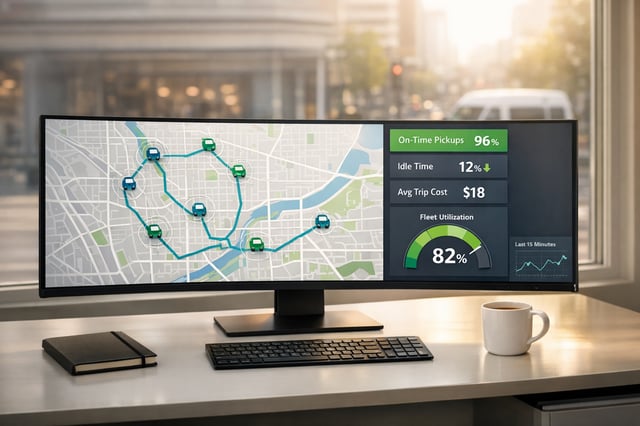
Beyond dispatch and billing, data analytics now play a pivotal role in refining operations. Modern platforms aggregate detailed trip data - like pickup and drop-off times, dwell times, and deadhead distances - into easy-to-read dashboards. By identifying patterns in idle time across service zones, times of day, facilities, and drivers, you can optimize routes, adjust schedules, and better allocate fleet resources. These tools also track vehicle utilization, deadhead mileage, and average wait times, enabling proactive changes to scheduling and routing. Additionally, time-stamped trip histories provide valuable evidence during contract negotiations with Medicaid brokers, managed care organizations, and facilities, helping to address delays that impact revenue. With these insights, NEMT operators can continuously fine-tune their processes to ensure every minute on the road is productive.
For more detailed strategies and tools tailored to U.S. NEMT operations, resources from NEMT Entrepreneur offer expert advice, case studies, and checklists to help optimize your technology stack and overall efficiency.
The key isn’t just collecting data - it’s turning that data into actionable insights that keep your fleet running efficiently and profitably.
Conclusion
Idle time eats away at your profits. Every minute a driver sits idle, you're covering costs like fuel, insurance, maintenance, and wages - without making a dime in return. For U.S. NEMT operators already working with tight margins, those wasted hours can quickly pile up, making it even tougher to stay profitable.
The good news? These costs aren’t just unavoidable - they’re measurable and manageable. By tracking key metrics like vehicle utilization, deadhead miles, and idle minutes, you can pinpoint inefficiencies and take action. Modern NEMT dispatch software, equipped with real-time GPS tracking, automated scheduling, and route optimization, can help slash operating and administrative expenses by 15–30%. This technology ensures your fleet stays busy by instantly reassigning vehicles, turning downtime into billable trips.
Reducing idle time doesn’t just save money; it also improves patient care. Smarter scheduling and real-time dispatch shorten pickup windows and reduce missed appointments. Studies show that cutting no-show rates by 25% can save clinics over $15,000 per month in lost revenue, while also preventing costly emergency room visits - hospital inpatient care costs more than 141 times a routine outpatient appointment. When your vehicles are efficiently utilized, patients arrive on time, health outcomes improve, and your standing with brokers and managed care organizations gets a boost.
To make this happen, consider adopting automated dispatch systems, standardizing wait time billing, and using data dashboards to fine-tune your operations. Set clear utilization goals, review KPIs regularly, and adjust schedules as needed. For more tips and tools, check out NEMT Entrepreneur.
In today’s competitive market, addressing idle time isn’t just a smart move - it’s a necessity. The operators who succeed are those who treat every vehicle hour as an opportunity and use technology to make the most of it.
FAQs
How can technology help reduce idle time in NEMT operations?
Technology plays a key role in cutting down idle time in non-emergency medical transportation (NEMT) operations by streamlining scheduling, routing, and communication. With advanced software, routes can be adjusted in real-time, helping drivers steer clear of delays and avoid wasting time between trips. Automated scheduling systems further ensure that vehicles are assigned to rides efficiently, filling in gaps and keeping operations running smoothly.
On top of that, tools like GPS tracking and mobile apps improve coordination between dispatchers and drivers. These tools make it easier to adjust schedules on the fly, keeping everything on track. By using these technologies, NEMT providers can run more efficiently, cut costs, and deliver timely, reliable services to their clients.
How does excessive idle time impact the finances of NEMT providers?
Excessive idle time in non-emergency medical transportation (NEMT) operations can drain resources and hurt the bottom line. Even when vehicles aren’t moving, expenses like fuel, maintenance, and insurance continue to pile up - without bringing in any revenue. Over time, these costs can eat into profit margins and limit the ability to invest in growth.
On top of that, high idle time often points to issues with scheduling or route planning. This inefficiency doesn’t just waste resources - it also means fewer clients served and missed opportunities. Streamlining operations to cut down on idle time can help NEMT providers boost profits and run their businesses more effectively.
How can NEMT operators optimize scheduling and minimize no-shows?
To make scheduling smoother and cut down on no-shows, NEMT operators can take a few smart steps. First, consider using automated scheduling software. This tool helps assign trips more effectively, reduces downtime, and ensures routes are planned efficiently, which keeps operations running more smoothly.
Another crucial step is maintaining proactive communication with passengers. Sending reminders - whether through calls, texts, or emails - before scheduled trips can confirm appointments and significantly lower the chances of missed rides. Adding flexible rescheduling options can also make it easier to handle last-minute changes without disrupting the schedule.
Lastly, keeping an eye on no-show trends can reveal valuable insights. For instance, if specific time slots or locations consistently have higher no-show rates, you can tweak your approach to improve reliability and provide better service.