

NEMT Entrepreneur provides expert insights, strategies, and resources to help non-emergency medical transportation professionals grow their businesses. Get industry-leading advice to succeed in NEMT.
Featured articles
If you mix up the billing code and the modifier, your NEMT claim can fail even when the trip was done right.
I look at it this way: the billing code tells the insurer what ride happened, and the modifier tells them where it started, where it ended, or how it was billed. In most private insurance NEMT claims, you need both. Miss one piece, use the wrong trip type, or attach the wrong origin/destination pair, and the claim may be denied by an automated edit, often due to common NEMT claim denial reasons.
Here’s the short version:
- Use the base HCPCS code first for the trip type, like
A0130for a wheelchair van - Add the modifier next for route details, like
RHfor residence to hospital - Bill mileage on a separate line when the payer allows it, such as
S0215 - Code each leg on its own, such as
RHoutbound andHRreturn - Match the modifier to the trip record exactly, including pickup, drop-off, and loaded miles
- Check coverage 24 to 48 hours before dispatch, because private plan rules can change
About 100% of clean NEMT claims depend on matching the trip record to the claim line. That means the service code, modifier, diagnosis support, and authorization all need to line up.
Modifier Monday: Ambulance Origin and Destination Modifiers
sbb-itb-cef70f4
Quick Comparison
| Item | Billing Codes | Modifiers |
|---|---|---|
| What it shows | The transport service | The trip details |
| Common format | HCPCS like A0130, T2005, S0215 |
Two characters like RH, RP, QM |
| Main job | Sets the base service being billed | Adds route or billing detail |
| Payment effect | Drives the base rate | Can change processing or cause denied claims |
| Common mistakes | Wrong trip type, wrong mileage code | Missing route pair, wrong facility letter |
Bottom line: I’d treat the billing code as the main service and the modifier as the detail that proves the trip setup. When both match the trip record, claims are much less likely to get kicked back. This is a critical step to avoid common NEMT claims errors.
Billing Codes: Identifying the Service Provided
In private-insurance NEMT claims, the billing code tells the payer what kind of trip was provided and sets the base rate. After that base service is in place, the next step is picking the code set that fits the trip.
CPT vs. HCPCS Level II in NEMT Billing
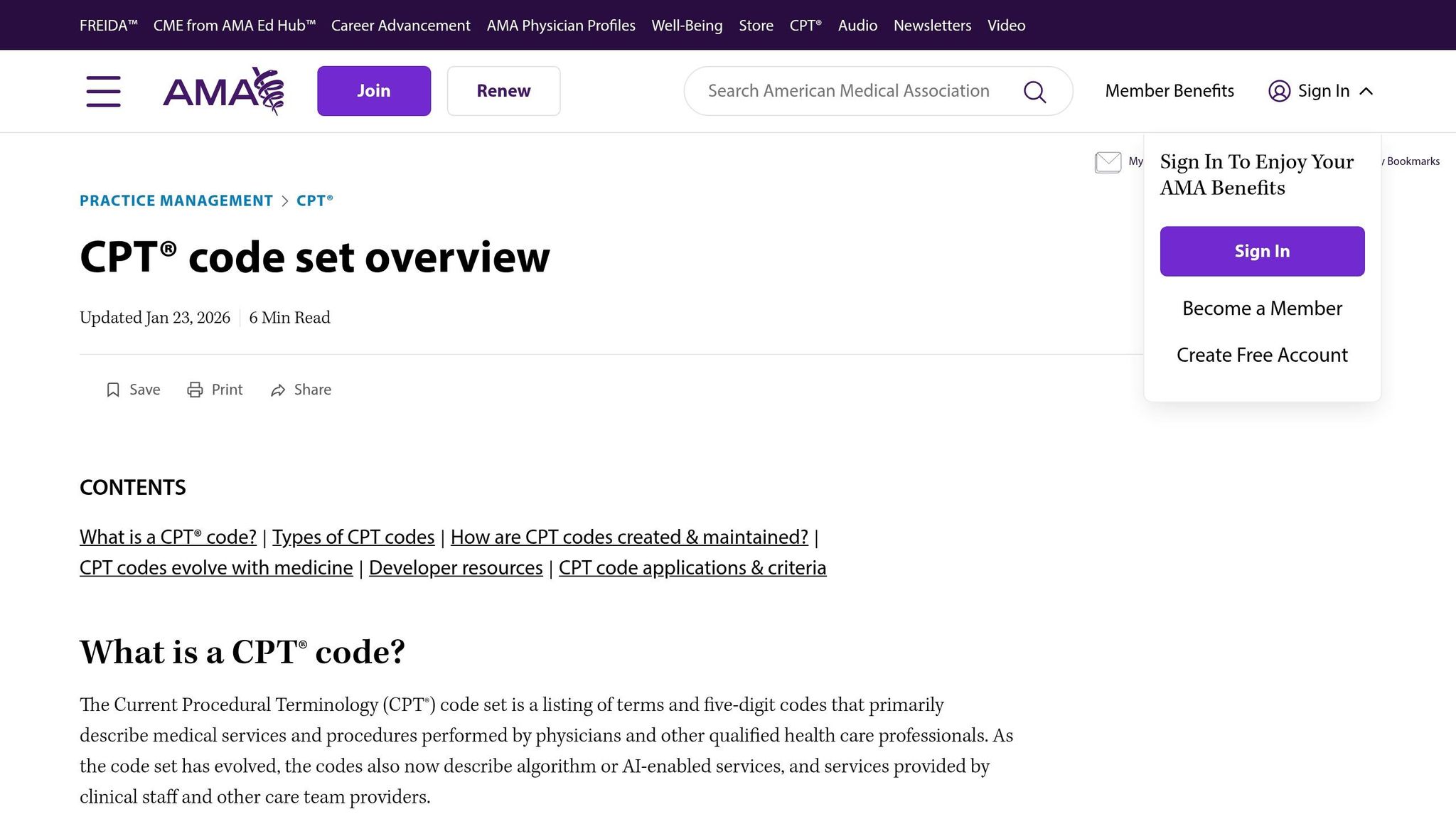
For NEMT, HCPCS Level II is the standard. CPT doesn't describe wheelchair van trips or per-mile transport. HCPCS Level II does.
Common NEMT Billing Code Examples
Use the code that matches the transport type before adding any modifier. The table below shows some of the HCPCS Level II codes used most often in NEMT billing:
| HCPCS Code | Description | Billing Unit |
|---|---|---|
| A0130 | Non-emergency transportation: wheelchair van | Per trip |
| A0428 | Ambulance service, BLS non-emergency transport | Per trip |
| T2005 | Non-emergency transportation: stretcher van | Per trip |
| T2003 | Non-emergency transportation: one-way trip | Per trip |
| S0215 | Non-emergency transportation, mileage | Per mile |
| A0425 | Ground mileage (used with ambulance codes) | Per loaded mile |
A0428 is used for BLS ambulance transport. T2005, by contrast, is for stretcher vans: non-ambulance gurney transport for patients who must remain supine but do not require medical monitoring. That distinction matters. If the base code is wrong, the claim can be denied.
Mileage should be billed on a separate line from the base trip code. So if you're billing A0130 and S0215, they should appear on separate claim lines.
The base code comes first. Modifiers come after it.
Once the base code shows the transport type, modifiers fill in the rest: where the trip started, where it ended, and what affected payment.
Modifiers: Adding Detail to How or Where the Service Occurred
After the base code, the modifier adds the trip details the payer needs. The billing code says what service was provided. The modifier adds the missing context by showing the trip’s origin, destination, or billing setup.
Missing or invalid origin/destination modifiers are one of the most common reasons claims get denied by an automated system.
Origin and Destination Modifiers in NEMT
NEMT origin/destination modifiers use two letters. The first letter shows where the trip started, and the second shows where it ended. So RH means the patient was picked up at their residence and taken to a hospital.
| Pair | Route |
|---|---|
| RH | Residence → Hospital |
| HR | Hospital → Residence |
| RP | Residence → Physician Office |
| RJ | Residence → Freestanding Dialysis |
| NP | Skilled Nursing Facility → Physician Office |
Use G for hospital-based dialysis and J for independent dialysis centers. That small difference matters. If the patient is going to dialysis but the wrong letter is used, the claim can still be rejected.
Each leg of the trip should be billed on its own. For example, use RH for the outbound trip and HR for the return trip.
Some payers also ask for extra modifiers tied to the service setup.
Other Modifiers That Can Affect Payment
QM means the service was provided under arrangement by a provider, while QN means the service was provided directly by the provider. Not every payer uses these modifiers.
Rules can change from one payer to another, so check the payer’s manual and your NEMT compliance requirements before submitting the claim.
Next, compare how billing codes and modifiers differ in claim setup and payment impact.
Billing Codes vs. Modifiers: Core Differences
Billing codes set the base service. Modifiers add the trip details that can change payment. Put simply, the billing code tells the payer what service was performed. The modifier tells the payer how, where, or who provided the service, or how it was billed.
That split becomes most important when a claim needs more than one modifier. In those cases, pricing modifiers come first. Informational modifiers come after.
Comparison Table: Billing Codes vs. Modifiers
| Attribute | Billing Codes | Modifiers |
|---|---|---|
| Definition | Standardized codes that identify the service or transport provided | Two-character additions that clarify specific circumstances of the billed service |
| Format | CPT: 5-digit numeric; HCPCS Level II: 1 letter + 4 digits | Usually 2 characters, alphabetic, numeric, or alphanumeric |
| Main role in claims | Tells the payer what service was performed | Tells the payer how, where, or who provided the service or how it was billed |
| NEMT examples | A0130, A0428, S0215 | RH, RP, QM, QN |
| Reimbursement impact | Sets the base billable service and baseline fee schedule | Can change claim processing, whether the claim pays at all, or reimbursement adjustment |
| Common error risk | Wrong transport type or mileage code | Missing or incorrect origin/destination or wrong pairing with the base code |
Once those roles are clear, the next issue is payment risk. A small coding mistake can throw off the whole claim.
How Coding Errors Cause Claim Denials
Wrong base codes and wrong modifiers create different problems. If you bill an ambulatory code for a wheelchair trip, the claim can be underpaid because the base rate is lower. That’s a base-code problem.
Modifier mistakes are a bit trickier. A missing origin/destination pair or the wrong facility letter can trigger a denial. The service may have happened exactly as documented, but if the modifier doesn’t match the trip details, the claim can still fail.
The next step is applying that rule the same way in day-to-day billing and maintaining NEMT compliance.
Using Codes and Modifiers in Daily NEMT Operations

NEMT Claim Workflow: Billing Codes + Modifiers Step-by-Step
A NEMT billing lifecycle for Cleaner Submissions
In day-to-day NEMT billing, that difference turns into a simple checklist. Start by verifying active NEMT coverage 24 to 48 hours before dispatch. Private plan enrollment can change from month to month, so a trip that looked covered last week may not be covered today.
For private insurance, call the provider services line to confirm which HCPCS codes the plan accepts. You’ll also want to confirm prior authorization needs. In many cases, that means getting a physician’s order and medical necessity records before the trip is billed.
After the trip is done, use this workflow to clean up the claim before it goes out:
- Confirm the service level - ambulatory, wheelchair, or stretcher - and choose the matching base HCPCS code.
- Build the origin/destination modifier pair from the trip’s pickup and drop-off points.
- Add the same origin/destination modifiers to mileage add-on codes like A0425 or S0215.
- Link an ICD-10 diagnosis that supports medical need, such as Z99.3 for wheelchair dependence.
- Review the claim before submission for missing authorization numbers, modifier mismatches, or incomplete addresses.
Once you’ve set the base code, the modifiers need to match the trip record exactly. No guessing, no shorthand. Every claim should include the full pickup and drop-off addresses, trip purpose, loaded mileage, timestamps, and signatures.
Conclusion: The Core Difference to Remember
The billing code tells the payer what service you provided. The modifier tells them the trip details that shape how the claim is processed.
FAQs
Do all payers require modifiers on every NEMT claim?
No. Modifier requirements are not universal across payers.
Many NEMT claims need origin and destination modifier pairs. But the rules can change from one payer to the next. State Medicaid programs, managed care organizations, and private insurance contracts may each have their own billing rules.
Some plans also ask for modifiers tied to vehicle type or trip purpose. Others may waive them for certain approved trips. Always check the payer’s current billing guidelines.
How do I choose between T2003 and A0130?
Choose the code based on your state’s Medicaid rules and the type of vehicle used. A0130 is the standard HCPCS code for wheelchair van transport.
T2003 is often used as a general per-trip or per-encounter code, but the exact use can vary by state and payer. Check your state’s Medicaid provider manual to confirm which code is approved and help avoid denials.
What documentation should match the modifier?
The origin and destination modifiers on your billing codes need to match the pickup and drop-off addresses in your trip records exactly.
That means you should include the full address, plus any suite, unit, or department number. It also helps to keep GPS-verified route data, timestamps in sequence, and signed driver attestations on file. Those details back up the modifier pair and can help you avoid claim denials.


