NEMT Entrepreneur provides expert insights, strategies, and resources to help non-emergency medical transportation professionals grow their businesses. Get industry-leading advice to succeed in NEMT.
Featured articles
Client feedback is a critical tool for improving non-emergency medical transportation (NEMT) services. Providers use it to fix issues like missed rides, improve safety, and enhance reliability. This not only helps patients make essential medical appointments but also boosts business performance by meeting industry benchmarks and improving satisfaction scores.
Key takeaways:
- 58% of NEMT users depend entirely on these services for medical care, yet 1 in 3 face barriers like no-show drivers or inaccessible vehicles.
- Metrics like grievance rates (industry standard: ~1%), patient satisfaction scores, and on-time performance help pinpoint areas for improvement.
- Providers like SafeRide Health achieved a grievance rate of under 0.25% by resolving complaints in 1.3 days and using feedback to improve operations.
- Feedback tools include post-ride surveys, focus groups, and GPS tracking to address issues quickly and efficiently.
Tapping Into Patient Feedback to Optimize Compassionate Communication
Key Client Feedback Metrics in NEMT
NEMT Service Quality Metrics and Industry Benchmarks
NEMT providers rely on specific metrics to pinpoint service gaps. These measurements offer actionable insights that help improve service quality and address client concerns effectively.
Complaint and Grievance Rates
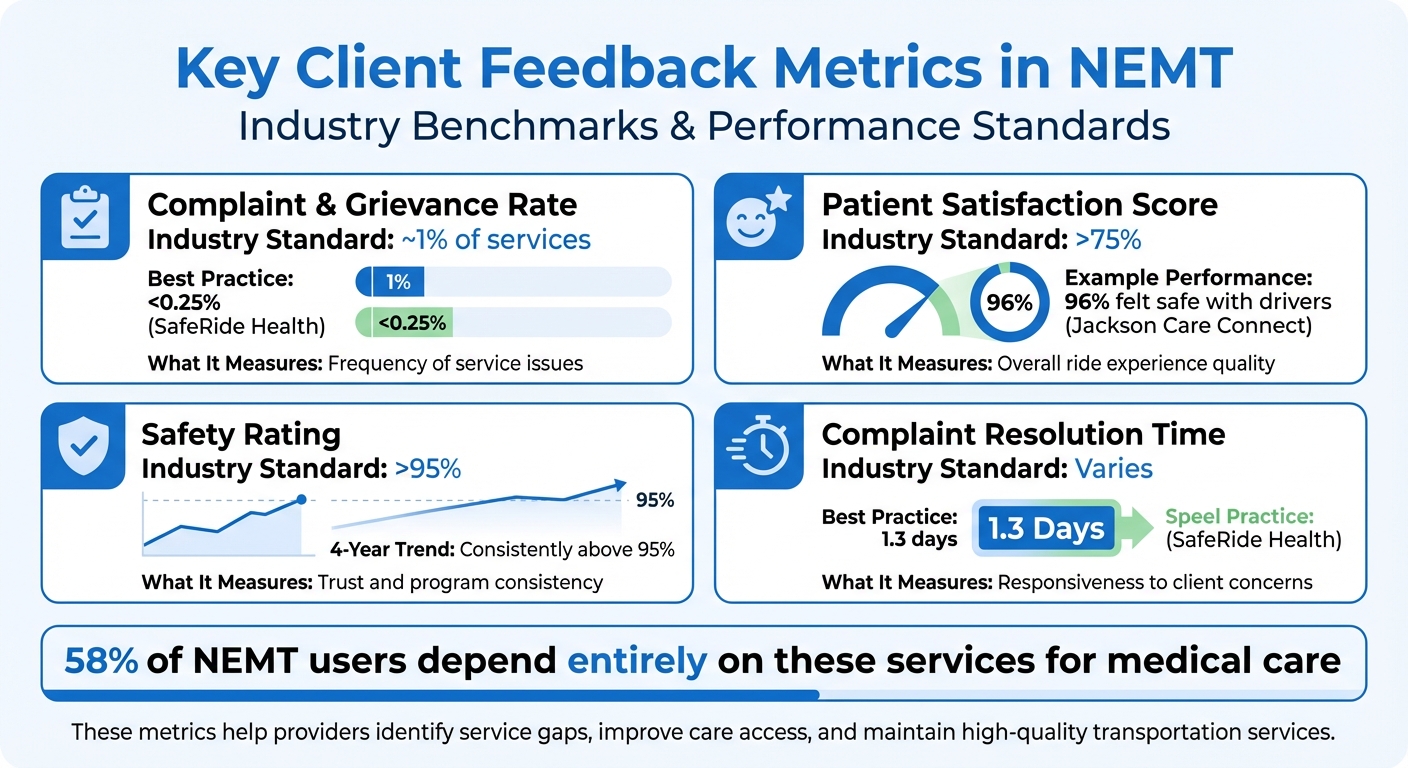
The complaint and grievance (C&G) rate measures how frequently issues arise during service delivery. The industry standard is around 1% of services provided. Exceeding this benchmark may signal deeper, systemic problems that require immediate attention.
"A complaint is any form of dissatisfaction. When transportation difficulties lead to complaints, it can have repercussions for the health plan as well as its vendors." - SafeRide Health
Monitoring these rates helps identify recurring problems, such as drivers consistently running late or vehicles not meeting cleanliness standards. Another critical aspect is resolution time, which gauges how quickly providers handle complaints. A fast response not only resolves the issue but also shows a commitment to addressing client feedback promptly.
Patient Satisfaction Scores
Patient satisfaction is typically measured through surveys and focus groups that gather feedback on ride experiences. These scores directly impact Medicare Advantage Star Ratings and associated financial incentives.
For example, from 2021 to 2024, Jackson Care Connect maintained satisfaction levels above 75% through their TransLink program. Detailed tracking revealed specific insights: 96% of members felt safe with their drivers, and 78% reported positive interactions with call center staff when scheduling rides. However, 66% of members who filed grievances felt their concerns weren’t adequately resolved, highlighting an area needing improvement. These findings help providers address specific shortcomings and enhance overall service delivery.
On-Time Performance and No-Show Reductions
Reliability and punctuality are crucial for NEMT services, as delays or driver no-shows can lead to missed medical appointments for clients who rely on these services.
"Service reliability is arguably the most important factor to consider when vetting NEMT managers." - Modivcare
Real-time tracking tools, such as GPS-enabled platforms, have become indispensable for managing on-time performance. These systems allow providers to monitor their fleet, reassign trips when delays occur, and address potential no-shows before they happen. This proactive approach ensures a smoother experience for clients while minimizing disruptions.
| Metric | Industry Benchmark | Why It Matters |
|---|---|---|
| Grievance Rate | ~1% of services | Identifies gaps in care access |
| Member Satisfaction | >75% (Jackson Care Connect) | Impacts ratings and member retention |
| Safety Rating | >95% (4-year trend) | Builds trust and program consistency |
| Resolution Time | 1.3 days (SafeRide Health) | Reflects responsiveness to client concerns |
Case Studies: How NEMT Providers Applied Feedback
SafeRide Health: Lowering Grievance Rates
SafeRide Health took a proactive approach to feedback by implementing post-ride surveys and weekly scorecards across their network of over 1,000 partners. Their efforts paid off - by 2023, they achieved a grievance rate of less than 0.25%, far outperforming the industry standard of 1%.
The company uses technology to address issues swiftly. For instance, when members reported trouble locating health center entrances, SafeRide manually updated geo-mapping pins to ensure drivers could find the correct spots. In another case, after a vehicle broke down, a customer service representative used real-time GPS to locate the stranded member and arranged a replacement ride within 30 minutes, avoiding a missed appointment.
"SafeRide treats every ride as a chance to connect members to crucial care and gather feedback about their experience. That's led to a Complaints & Grievances rate well below industry average - and a commitment to respond immediately when they do occur." - Brian Gebhardt, Chief Operating Officer, SafeRide Health
SafeRide Health has maintained an impressive ride rating of 4.8 out of 5, based on over 9 million rides annually across 48 states. Complaints are resolved in an average of 1.3 days, and they incentivize providers by tying ride volumes and faster payments to feedback metrics. High-performing "Tier 1" providers benefit from these rewards, creating a system that encourages continuous improvement.
Paramount NEMT: Improving Comfort Through Better Equipment
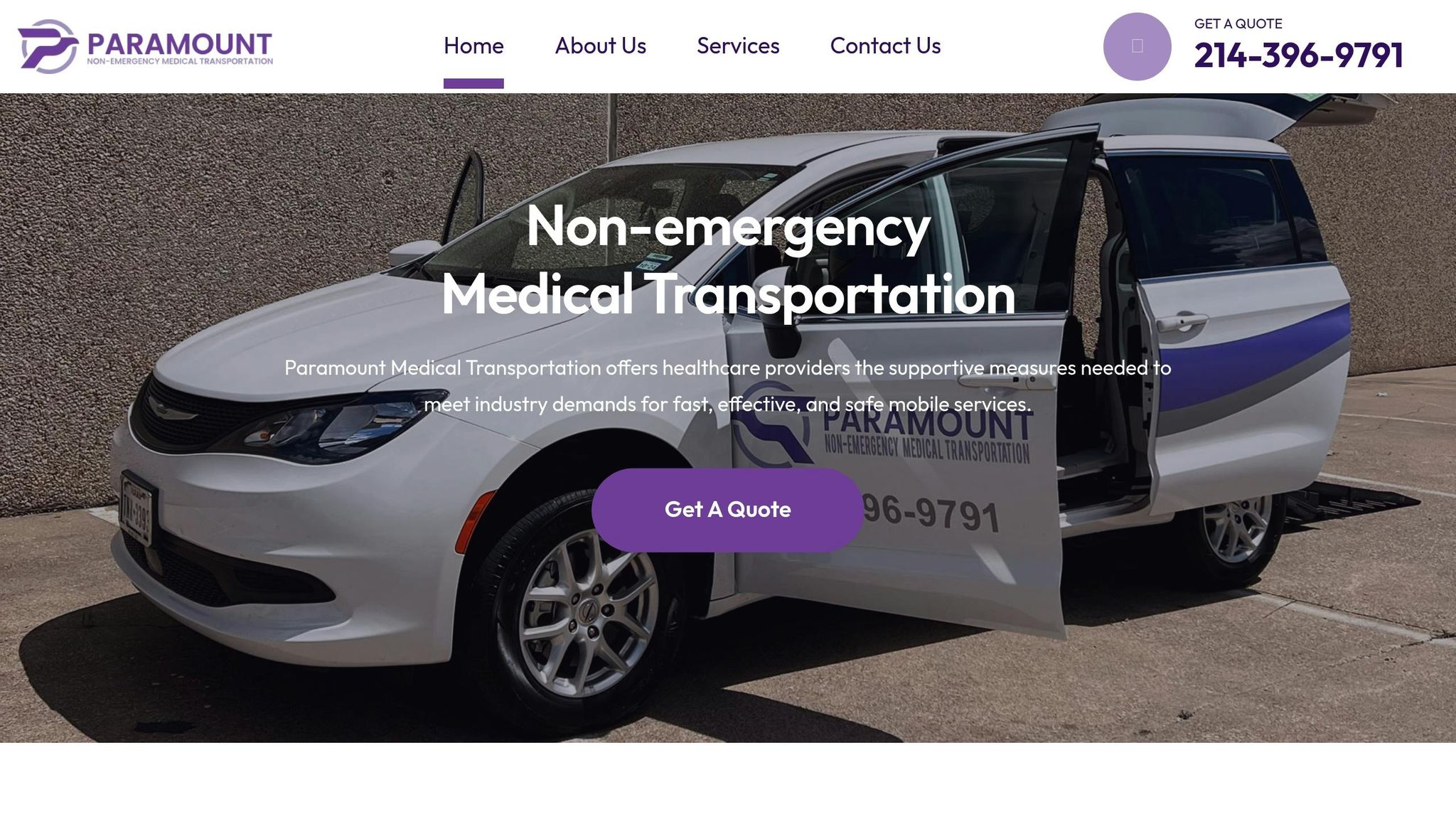
Paramount NEMT took a different path to address client concerns. After receiving feedback about discomfort, they upgraded to the Traversa Transport Wheelchair by Broda. This change significantly improved the experience for patients with mobility challenges.
Regional Providers: Tech-Driven Feedback Solutions
From 2021 to 2024, regional providers embraced technology to enhance service quality. They used surveys, focus groups, and mobile app ratings to gather actionable feedback. This data-driven strategy led to notable improvements, including faster driver reassignments and better service protocols.
For example, CareOregon’s Ride to Care program evaluation found that 82% of members had positive experiences with drivers, and 96% felt safe during transport. However, the data also highlighted areas for improvement, such as addressing language barriers - 1 in 6 members struggled with communication. As a result, providers were encouraged to offer materials in members' preferred languages.
sbb-itb-cef70f4
How to Incorporate Feedback into Operations
Post-Ride Surveys and Feedback Mechanisms
Post-ride surveys - delivered via text, email, or app - are a quick way to gather client feedback on key aspects like driver behavior, punctuality, and vehicle cleanliness. These surveys generate valuable data, helping identify patterns and areas for improvement.
However, numbers alone don’t always tell the full story. Follow-up phone calls and focus groups provide a deeper dive into client experiences, uncovering challenges that might not surface in survey responses. For instance, during a 2024 TransLink program evaluation led by Yelena Voznyuk, focus groups revealed that about 1 in 10 participants faced language barriers. This insight led to recommendations for multilingual materials and additional staff support.
Real-time tracking also plays a role by allowing immediate reassignment of rides during delays. Additionally, anonymous feedback channels are essential. In the same TransLink study, 33% of drivers and 40% of providers expressed a preference for anonymous channels to ensure unbiased input.
Training and Coaching Based on Feedback
Feedback isn’t just for analysis - it’s a tool for action. Survey results and complaint patterns can pinpoint exactly where training efforts should focus. For example, if late arrivals or confusion about mobility assistance are recurring issues, these become priorities for training. The TransLink evaluation found that over 50% of drivers received incomplete or incorrect information about mobility needs - like whether a passenger required a wheelchair. This led to recommendations for standardized verification steps in the dispatch process.
Regular training updates, such as quarterly refreshers, help ensure staff stay informed about compliance and safety protocols. Cultural competency training is equally important, addressing communication barriers that impact about 1 in 10 passengers. Despite 78% of members reporting positive experiences with call centers, 66% felt their grievances were ignored, highlighting an area where coaching could make a meaningful difference.
"Every complaint is an opportunity to address a shortcoming. A dirty vehicle or dangerous driver can be removed from service, for example, ensuring that no other patients have an unpleasant experience." - Modivcare
These training efforts can be tracked and evaluated using specific KPIs to measure their impact on operations.
Using KPIs to Measure Feedback-Driven Success
Key performance indicators (KPIs) are essential for assessing the success of feedback-driven changes. Metrics such as trip completion rates, grievance resolution satisfaction, and the accuracy of mobility assistance data provide a clear picture of operational effectiveness. This approach has been proven effective in various case studies, where providers who consistently meet or exceed benchmarks often have robust feedback systems in place.
Weekly scorecards offer real-time updates on ride ratings and overall performance. Linking these metrics to incentives - like faster payments or increased ride assignments - can encourage accountability and continuous improvement. TransLink, for example, has maintained member satisfaction rates above 75% for four consecutive years, showcasing the long-term benefits of consistent measurement and responsiveness.
Resolving complaints quickly is just as important as resolving them well. When members see their issues addressed promptly, it builds trust. Tracking resolution times and aiming for faster outcomes - like SafeRide Health’s average of 1.3 days - can significantly enhance the overall experience for clients.
Conclusion
Drawing insights from these case studies and strategies, it’s clear that structured feedback plays a key role in improving service quality and ensuring long-term success. For NEMT providers, client feedback isn’t just about solving immediate issues - it’s a powerful way to identify operational gaps, address underperformance, and refine services based on real-world experiences. This proactive approach not only resolves problems but also helps prevent them from happening again.
For those working with Medicare Advantage plans, there’s an added incentive: high member satisfaction scores can lead to better Star Ratings. These ratings unlock financial bonuses that can be reinvested into enhancing services. With 58% of NEMT users relying on these services for medical appointments, reliability becomes non-negotiable. Feedback that improves on-time performance and vehicle quality directly impacts members’ lives by reducing missed appointments and cutting down on emergency room visits.
"If you can demonstrate to members that their voices are being heard and that their opinions are guiding your NEMT solutions, they will have a more positive perception of their policy and your organization, and a satisfied beneficiary is unlikely to switch their MCO or Medicare provider anytime soon." - Modivcare
Providers who have embraced structured feedback processes have seen measurable improvements. Whether it’s implementing post-ride surveys, using complaint patterns to train staff, or tracking key performance indicators to monitor progress, these efforts create a feedback-driven culture. Such a culture builds trust, boosts member retention, and helps make smarter operational decisions. Every step taken toward better feedback processes strengthens your foundation for growth and positions your business for long-term success.
FAQs
How do NEMT providers address complaints quickly and effectively?
NEMT providers take complaints seriously, treating each one as an urgent matter. The process usually begins with an immediate acknowledgment to let the rider know their concern is being addressed. From there, a dedicated team investigates the issue, pinpoints the cause, and works quickly to resolve it. Once the matter is addressed, they follow up with the rider to confirm satisfaction before closing the case. This method not only fixes problems but also strengthens trust and loyalty.
To improve efficiency and consistency, many providers rely on digital tools like real-time tracking systems to tackle delays before they escalate. Automated notifications keep riders updated about schedules or changes, while feedback systems ensure concerns are directed to the right team members. Additionally, well-trained staff, equipped to make quick decisions, often resolve most issues during the first interaction. This approach creates a smoother experience for riders and helps reduce the number of complaints.
For providers aiming to refine their complaint-handling processes, there are expert resources and strategies available to turn feedback into meaningful improvements and elevate the overall quality of service.
What metrics do NEMT providers use to measure service quality?
NEMT providers use specific metrics to assess and improve service quality, focusing on customer feedback, operational efficiency, and complaint management. Customer satisfaction metrics - such as Net Promoter Score (NPS), Customer Satisfaction Score (CSAT), and Customer Effort Score (CES) - are typically collected through post-trip surveys. These surveys evaluate key aspects like driver professionalism, vehicle cleanliness, punctuality, ease of scheduling, and accommodations for special needs. The feedback gathered helps providers turn rider input into practical improvements.
From an operational standpoint, providers closely monitor on-time rates, no-show rates, and complaint rates to ensure smooth performance. Aiming for high standards, best practices recommend maintaining at least 95% on-time pickups and drop-offs, keeping no-show rates under 0.1%, and complaint rates below 1%. Tools like real-time GPS tracking and performance dashboards play a crucial role in meeting these benchmarks by allowing providers to adjust routes and schedules on the fly.
The complaint and grievance rate serves as another critical metric, measuring the percentage of rides that result in formal complaints. This data highlights recurring issues, enabling providers to address problem areas and improve overall service quality, ultimately leading to higher rider satisfaction.
How do NEMT providers use client feedback to improve their services?
Client feedback is a cornerstone for refining NEMT services, shedding light on areas that need attention. By using structured surveys, providers can gather valuable insights on crucial factors like driver professionalism, vehicle cleanliness, punctuality, communication, and accommodations for special needs. This input helps identify recurring challenges - such as delays or unclear directions - and translates them into targeted training for drivers. Training often focuses on improving communication, time management, and the proper use of equipment.
Beyond individual improvements, feedback collected on a larger scale drives broader system upgrades. Tools like real-time tracking and post-trip surveys allow providers to fine-tune routing, improve dispatch operations, and simplify notification processes. Acting on client input not only enhances rider satisfaction but also boosts operational efficiency and raises service quality. This ongoing feedback loop ensures continuous progress and aligns with industry standards for building successful NEMT operations.