How to Start an NEMT Business in Florida (2027): Plans, Vendors and Local Permits


The operator's publication for non-emergency medical transportation. State licensing guides, broker intel, a 2,000+ provider directory and The Dispatch, our weekly newsletter.
Florida has no state NEMT license. That sounds like good news until you realize what replaces it: your right to run Medicaid trips comes from three separate places, and only one of them is a government agency. You need a Florida Medicaid enrollment, a contract with the transportation vendor that each health plan uses, and whatever your county requires of for-hire vehicles. The vendor contract, not the state enrollment, is where new operators usually wait longest. Here is how each gate works, who controls it, and the order that saves you money.
How Florida Medicaid transportation actually works
Most Florida Medicaid members are enrolled in Statewide Medicaid Managed Care (SMMC). The current SMMC contracts started February 1, 2025 and run through 2030, with plans including Humana Healthy Horizons, Sunshine Health, Simply Healthcare, Florida Community Care, Aetna Better Health, UnitedHealthcare Community Plan, Molina, Community Care Plan and the Children's Medical Services plan, which moves from Sunshine to Molina on October 1, 2026. Each plan owes its members non-emergency transportation, and almost all of them hand it to a transportation vendor.
As of September 2026, plan websites name ModivCare (Humana), MTM (Molina, and UnitedHealthcare since March 1, 2026) and Alivi (Sunshine). MTM also absorbed Access2Care, and Ride2MD has served Simply and Florida Community Care. The Agency for Health Care Administration (AHCA) posts a plan-by-plan vendor list, but its current version dates to July 2023 and is already out of date for some plans. Confirm the vendor on each plan's own member transportation page before you apply.
For the smaller group still in fee-for-service Medicaid, AHCA contracts transportation brokers (MTM, for example, arranges fee-for-service rides in Regions 3 through 8), and under Florida's coverage policy (Rule 59G-4.330) all fee-for-service non-emergency transportation must be coordinated and authorized through the broker. Either way, you are working through a broker or vendor, not billing the state directly.
Gate 1: Business registration and your county's for-hire rules
Register the company with the Florida Division of Corporations (Sunbiz), get an EIN, and get your local business tax receipt from the county and, where required, the city. Then check your county's for-hire rules, because this is where Florida gets local.
Miami-Dade is the clearest example. The county's Passenger Transportation Regulatory Division issues a Non-Emergency Transportation Certificate, alongside separate certificates for passenger motor carriers and for the county's own Special Transportation Service contract work. Drivers need a county for-hire chauffeur license, which requires a class and a county exam. Vehicles are inspected before they operate and periodically after that; as of September 2026 the county lists $70 for a new vehicle inspection and $38 for periodic inspections. Other counties set their own rules or have none, so call your county's licensing office before you assume either way.
Gate 2: Florida Medicaid enrollment
You need an NPI and a Florida Medicaid enrollment. If you will only serve SMMC plans, which is most new operators, you can use limited enrollment, which AHCA offers to providers that only participate in a managed care plan's network. AHCA's enrollment policy also asks transportation providers for a local license or business tax receipt (or proof none is required) and proof of liability insurance of at least $100,000 per person and $200,000 per incident.
Two details trip people up:
- Fingerprints. Everyone disclosed on the provider application must submit fingerprints for background screening under federal Medicaid rules (42 CFR Part 455, Subpart E) and section 409.907 of the Florida Statutes, through the state's Care Provider Background Screening Clearinghouse. That means every owner and managing employee you list, not just you.
- Risk category. Florida classifies non-emergency transportation providers as "limited" risk, lighter than ambulance services, which are "moderate." That keeps screening simpler, but it does not replace the vendor's own checks.
Gate 3: The plan's transportation vendor (the gate that controls your revenue)
No state agency can make ModivCare, MTM, Ride2MD or Alivi add you to a network. Each vendor runs its own credentialing, and each sets its own requirements for insurance limits, vehicle inspections, driver screening and training, and technology. Expect:
- Insurance at the vendor's required limits, which are typically well above Florida's personal auto minimums and above AHCA's enrollment floor. Get the exact requirement in writing from each vendor before you buy a policy.
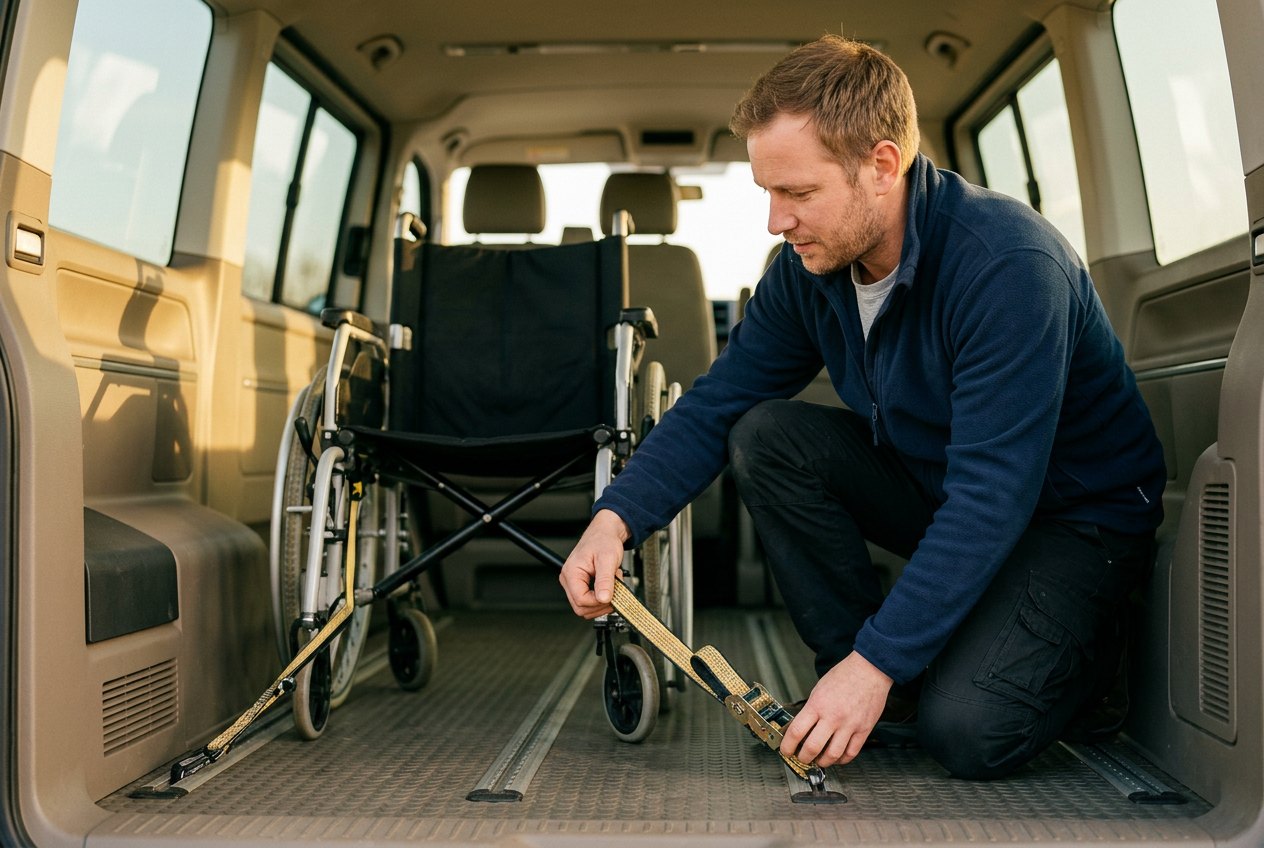
- Driver checks: background screening, motor vehicle records, drug testing, and training in CPR, first aid, passenger assistance and wheelchair securement.
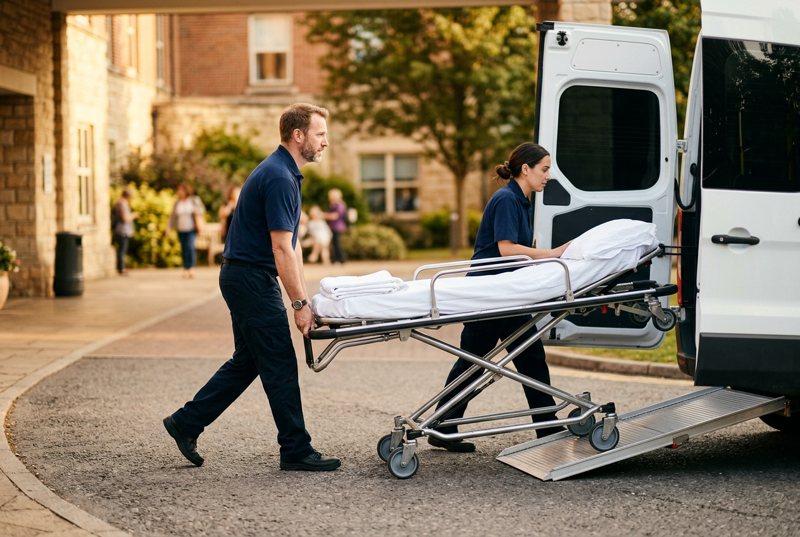
- Vehicle inspections by the vendor, with ADA-compliant lifts, ramps and securement for wheelchair and stretcher service.
- Technology: app-based trip acceptance, GPS verification and signature capture are standard now.
Credential with more than one vendor if you can. Because each plan uses a different vendor, a single contract only reaches that plan's members, and the plan mix in your county decides how many trips that is.
Gate 4 (optional): The Transportation Disadvantaged program
Florida runs a separate, non-Medicaid program under Chapter 427 of the Florida Statutes. The Commission for the Transportation Disadvantaged funds trips for older adults, people with disabilities and low-income riders, delivered through a Community Transportation Coordinator in each county. Coordinators often subcontract with private operators.
The standards are set in Rule 41-2.006: liability insurance of at least $200,000 per person and $300,000 per incident, drug and alcohol testing for safety-sensitive positions (pre-employment, random, post-accident and reasonable suspicion), two-way communication and working heat and air conditioning in every vehicle, and driver ID shown to passengers. Background screening standards are set locally in each county's service plan. It is steady, local work, and a good second revenue line next to Medicaid.
What 2027 changes for Florida operators
Florida did not expand Medicaid, so the new federal work requirements and six-month renewals, which apply to the expansion adult group, largely pass Florida by. Retroactive coverage is already thin here: Florida ended the three-month retroactive period for non-pregnant adults 21 and older in 2019, and for applications on or after January 1, 2027, federal law shortens it for everyone else as well. Members who apply late have little or no back coverage, which makes eligibility checks at trip intake more important. A trip for someone who turns out not to be covered is a trip you do not get paid for.
Florida's other opportunity is its senior population. Medicare's annual open enrollment runs October 15 to December 7, and many Medicare Advantage plans include rides as a supplemental benefit through their own vendors. Add private-pay seniors and seasonal residents, and Florida is one of the better states to build a private-pay line alongside Medicaid.
The full sequence
| Step | Who | Notes |
|---|---|---|
| Register the business, EIN, local business tax receipt | Sunbiz, IRS, county and city | Days |
| County for-hire rules | County licensing office (for example, Miami-Dade) | Certificate, chauffeur registration and vehicle inspections where required |
| NPI | NPPES | Free, online |
| Florida Medicaid enrollment (limited, if SMMC-only) | AHCA | Fingerprints for everyone on the application |
| Insurance quotes at vendor limits | Your carrier | Before you buy a vehicle |
| Vendor credentialing | ModivCare, MTM, Ride2MD, Alivi (by plan) | The longest step; apply to more than one |
| Optional: Transportation Disadvantaged subcontract | Your county's Community Transportation Coordinator | $200,000 / $300,000 liability; drug and alcohol testing |
| Vehicles, drivers, training | You | After the contract is in sight, not before |
Do these five things next
- Find out which plans dominate your county and which vendor each uses. Your target list is that combination, not "Florida Medicaid."
- Call each vendor's provider relations line and ask whether they are adding providers in your county, for which service levels, and what insurance limits they require.
- Call your county licensing office about for-hire certificates, chauffeur registration and inspections.
- Quote insurance at the highest limit you will need, then decide on vehicles. Run the numbers with the vehicle break-even calculator.
- Talk to your county's Community Transportation Coordinator about subcontract work while vendor credentialing is pending.
Rules and vendor lists change. Confirm with AHCA, your county and each vendor before you file. Once you are running, claim your listing in the NEMTrepreneur Directory so facilities, plans and families can find you. New to the business? Start with how to start an NEMT business.
Sources
- AHCA: Non-Emergency Transportation Services Coverage Policy (59G-4.330)
- AHCA: Provider Enrollment Policy (59G-1.060)
- AHCA: SMMC plan transportation vendors
- AHCA: 2025-2030 SMMC plans
- Fla. Admin. Code R. 41-2.006 (Transportation Disadvantaged standards)
- Miami-Dade: For-hire transportation licenses
- AHCA: CMS Plan transition to Molina
- AHCA: Medicaid retroactive eligibility
- Medicaid.gov: Assurance of transportation